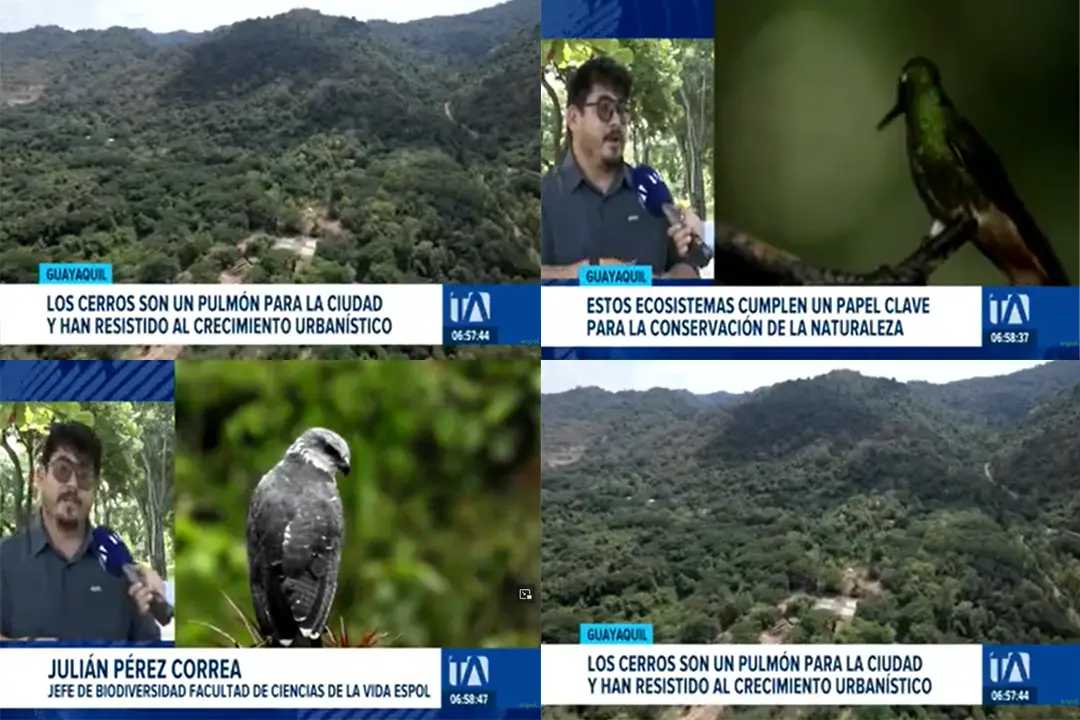
Guayaquil encompasses at least six protected forests and hills—including Cerro Blanco, Cerro Colorado, and Cerro Paraíso—that function as urban green lungs and natural barriers against unplanned urban sprawl.
During his remarks, Julián Pérez Correa, specialist at FLS-ESPOL, emphasized the biological richness concentrated within these ecosystems:
"In birds alone, we have around 50 endemic species; imagine the true significance of Guayaquil's forests. One of the most relevant in this context is, for example, the grey-backed hawk, which is actually a flagship species and conservation target for several local forests here in Guayaquil," the biologist pointed out.
The report highlights that these hills not only harbor high levels of biodiversity (for instance, Cerro Blanco records over 300 bird species and 42 reptile species), but also face intense pressure from informal settlements and slope-associated geological hazards for nearby communities. These factors underscore the urgent need for sustainable land-use planning to preserve these ecological reserves.