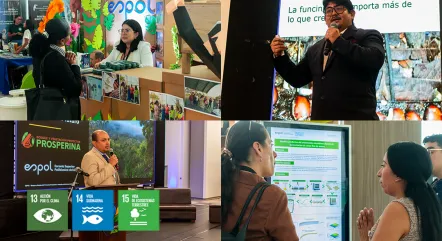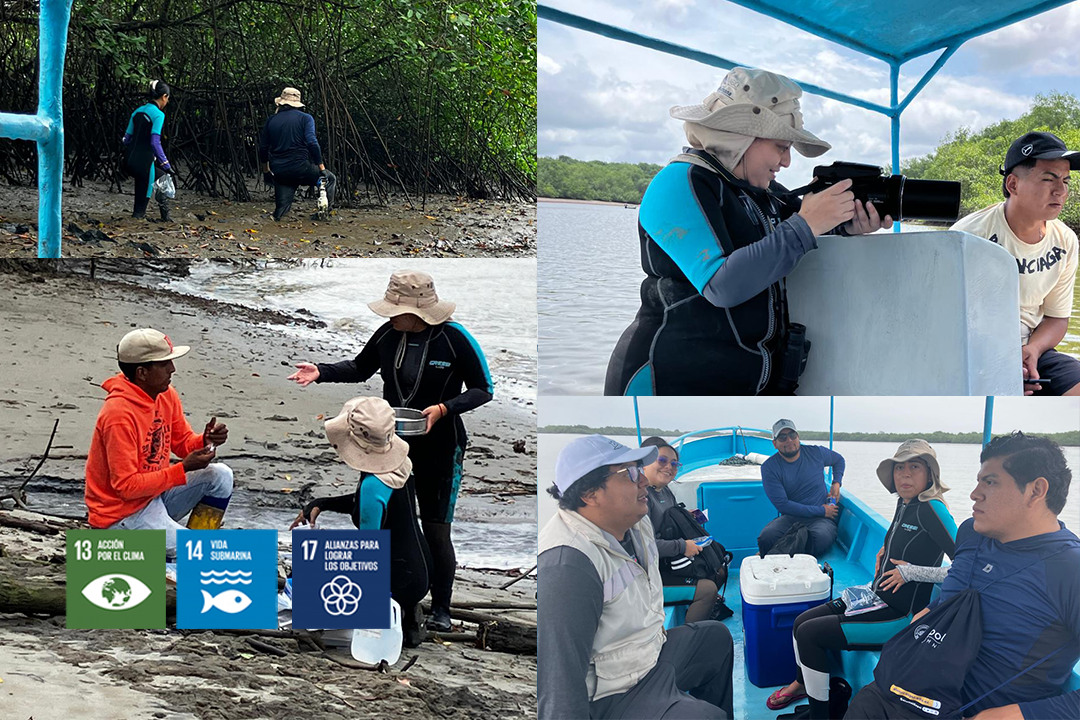

Within the framework of the GCBC-Manglar: Biodiversity for Climate and Social Resilience project—jointly executed by the National Institute of Biodiversity (INABIO) and the Faculty of Life Sciences (FLS-ESPOL) under the technical coordination of Kevin Mindiola and Paolo Piedrahita, Ph.D.—an intensive biological monitoring campaign was conducted from March 14 to 21 across strategic mangrove sites in Esmeraldas, Manabí, and Guayas provinces.
The scientific expedition covered key coastal areas, including Muisne (Esmeraldas), Bahía de Caráquez (Manabí), as well as Puná Island, Puerto Hondo, and the Manglares Churute Ecological Reserve (Guayas). This field intervention forms part of the program “Biodiversity for Climate and Social Resilience: Empowering Coastal Communities in Sustainable Production Practices in Ecuador,” funded by the Global Centre on Biodiversity for Climate (GCBC). Its primary objective is to elucidate the trophic interactions that sustain ecosystem productivity, placing special emphasis on the mangrove black ark cockle (concha negra / Anadara tuberculosa), a vital hydrobiological resource for the food security and livelihoods of coastal populations.
Throughout the field campaign, researchers conducted comprehensive, multi-trophic sampling to assess mangrove ecosystem health and functionality:
Monitoring of coastal bird communities.
Analysis of mangrove soil microbiomes.
Ecological assessment of benthic communities.
A central pillar of the expedition was the active involvement of local communities across Esmeraldas, Manabí, and Guayas, who directly accompanied and supported field sampling operations. This collaboration highlighted ancestral ecological knowledge and demonstrated strong community commitment to safeguarding mangrove ecosystems—strategic habitats recognized for their high blue carbon sequestration capacity, natural coastal protection against extreme weather events, and sustained fisheries provisioning.