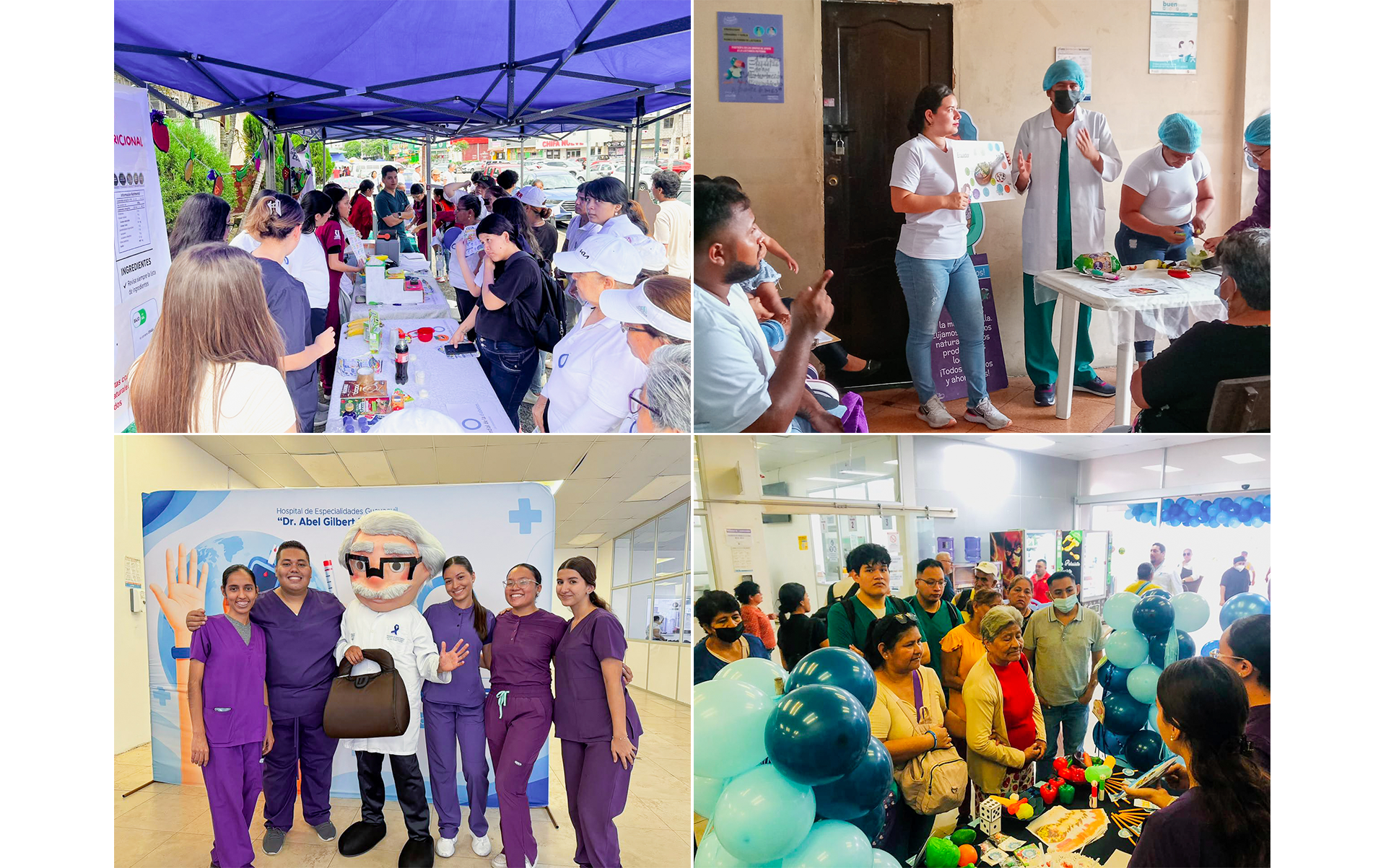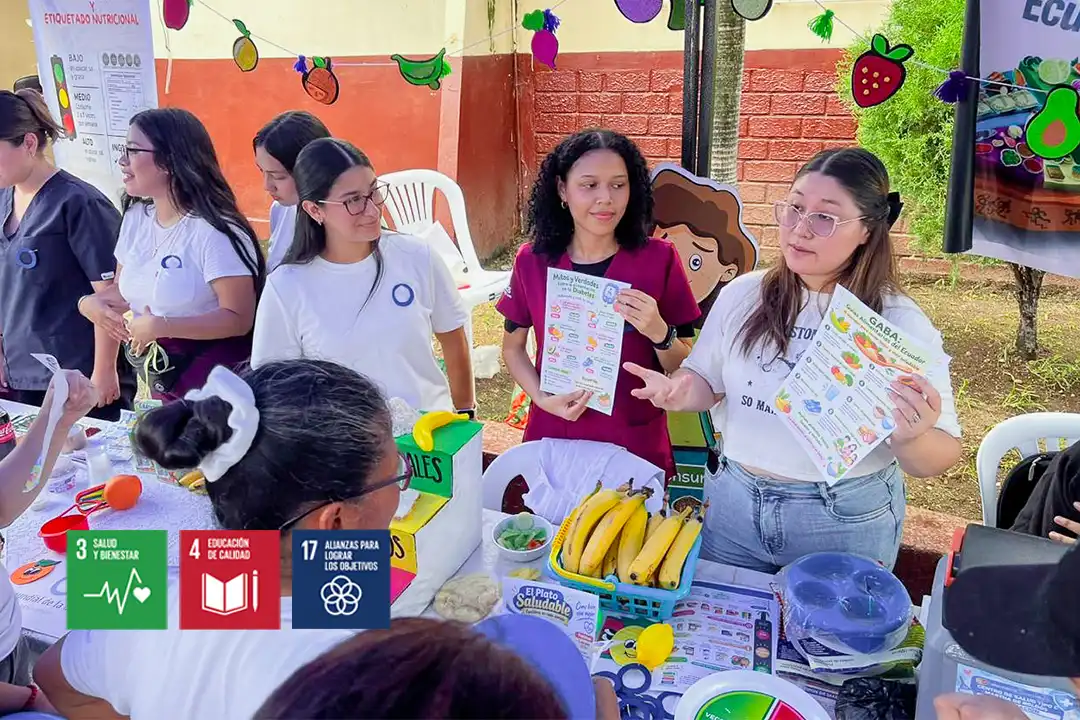


In observance of World Diabetes Day, commemorated annually on November 14, senior students from the Nutrition and Dietetics undergraduate program at the Faculty of Life Sciences (FLS-ESPOL) completing their rotating clinical internships carried out an extensive agenda of nutritional education and preventive health outreach tailored to patients, families, and priority population groups.
Through interactive sessions deployed across the healthcare facilities where they undertake their clinical training, these future dietitians shared actionable knowledge to promote self-care, balanced eating habits, and early risk detection. Key community interventions included:
Vergeles Health Center: Clinical dietetic intern Génesis López, R.D.I. delivered the educational lecture “Green Light to Prevention,” equipping patients with practical tools to identify metabolic risk factors and adopt healthy lifestyles.
Health Center No. 6: Clinical dietetic intern Fernando López, R.D.I. led the hands-on culinary workshop “Healthy Snacks” for the Senior Citizens' Club, demonstrating nutritious food alternatives tailored to age-specific metabolic requirements based on the Ecuadorian Dietary Guidelines (Guías Alimentarias del Ecuador).
Chongón Health Center: Clinical dietetic intern Rosa Pineda, R.D.I. facilitated the workshop “Healthy Eating and Reducing Sugar-Sweetened Beverage Intake,” educating community members on building balanced daily meals and maintaining healthy hydration habits.
Pascuales Health Center: Clinical dietetic intern Selena Legña, R.D.I. led the preventive talk “Diabetes Prevention” tailored to the Senior Citizens' Club, strengthening preventive health literacy among older adults.
Dr. Abel Gilbert Pontón Specialty Hospital: A team of clinical dietetic interns actively participated in the hospital's Open House for World Diabetes Prevention Day, delivering personalized nutritional counseling and educational resources to dozens of patients and visitors.
The faculty commends the enthusiasm, service vocation, and technical rigor of its clinical interns, as well as the continued openness of Ecuador’s public healthcare institutions that make these experiential clinical learning environments and community health transformations possible.