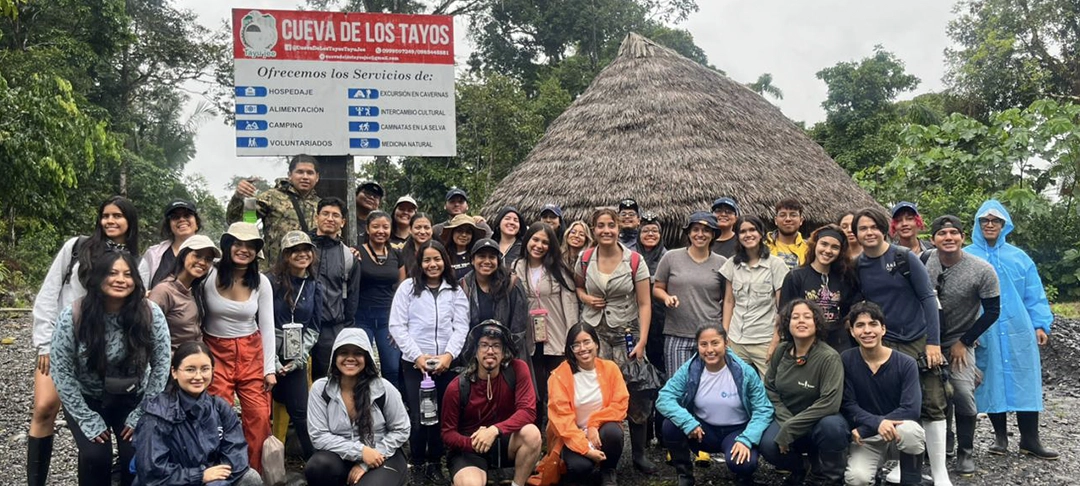

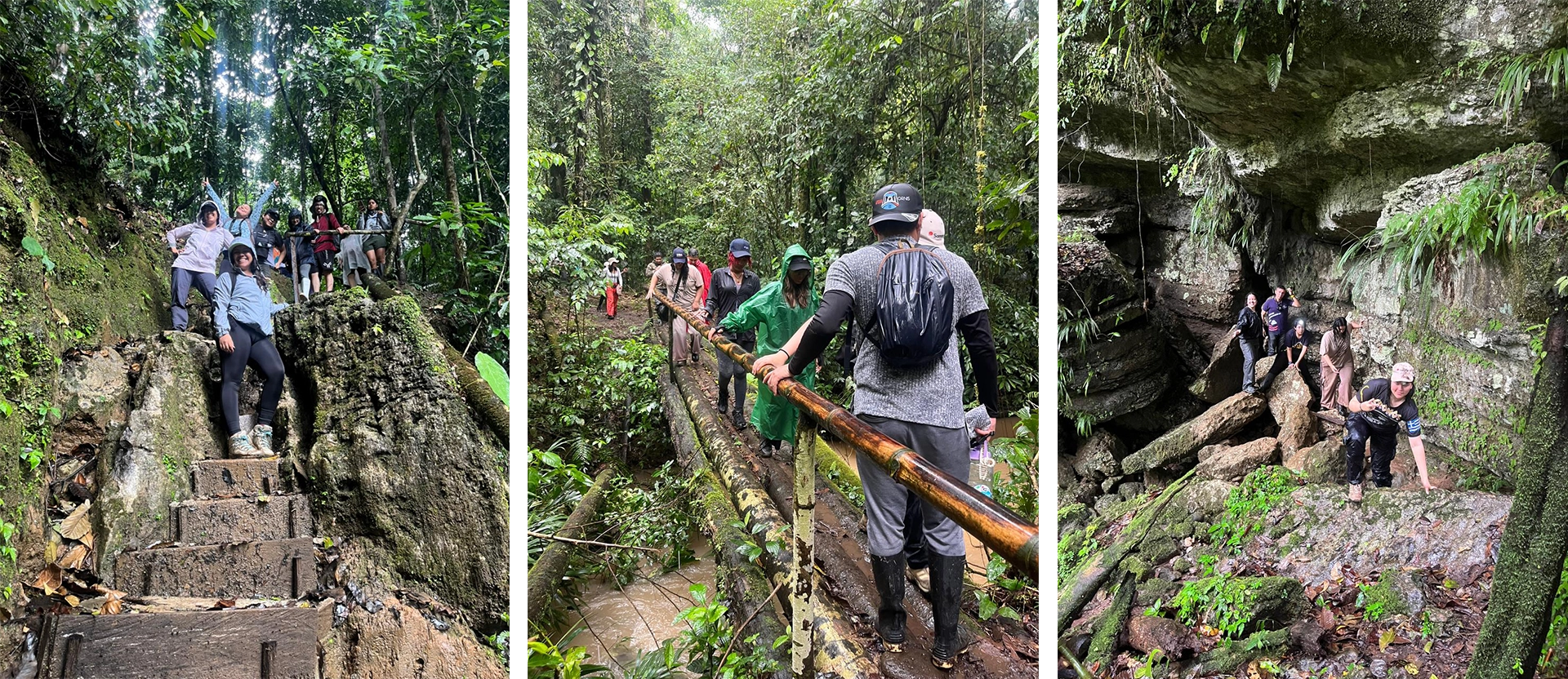
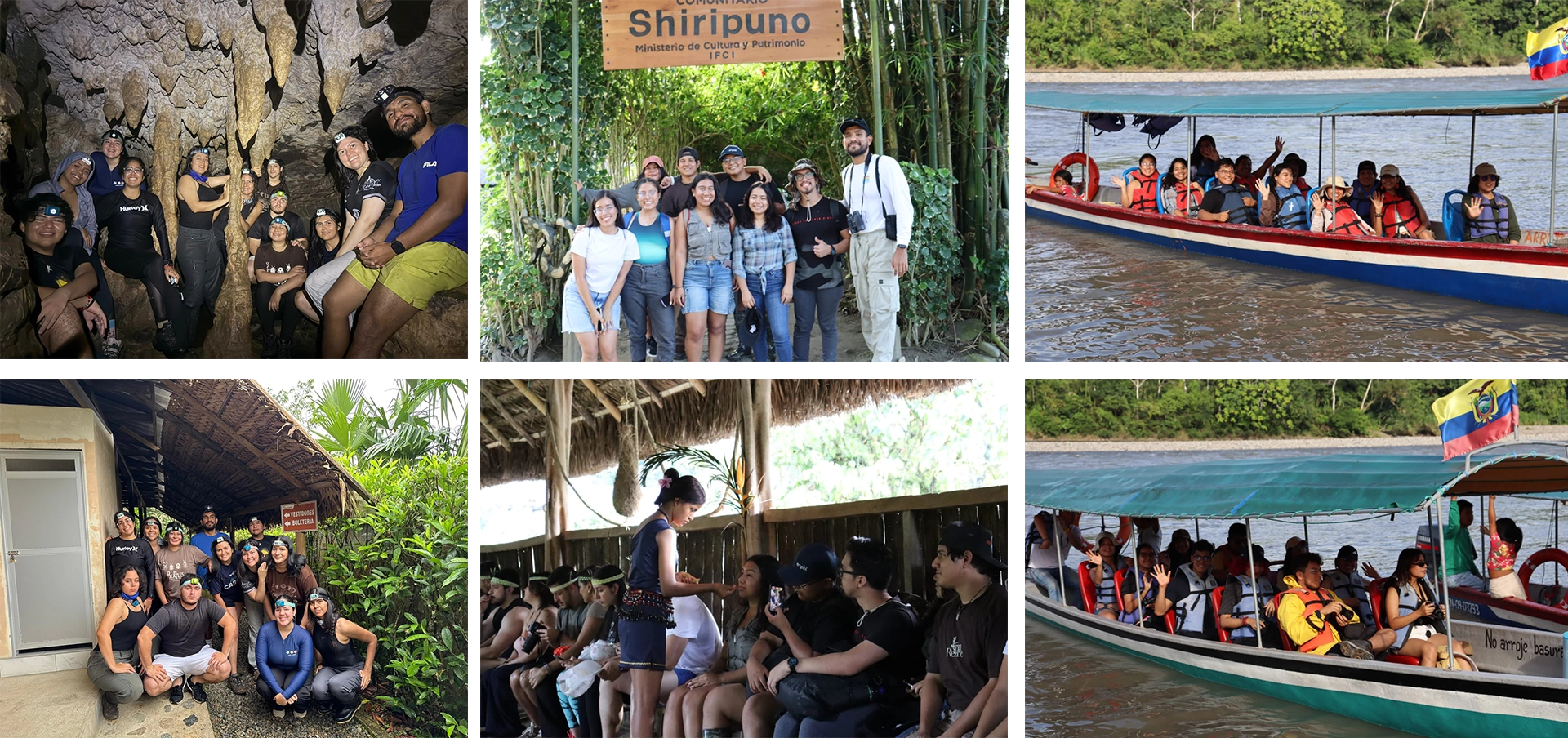
In a deep immersion into Ecuador's most enigmatic ecosystems, students from the Faculty of Life Sciences (FLS) at ESPOL conducted a comprehensive field trip to the Cueva de los Tayos and the Jumandy Caves.
The expedition, which took place from January 8th to 11th, covered strategic locations in the provinces of Napo (Tena) and Pastaza (Puyo). The primary objective was to closely study the morphological and behavioral adaptations of native fauna inhabiting the extreme environments of Amazonian caverns.
Academic and Technical Leadership
The organization of this journey was led by Professor Julián Pérez Correa, who coordinated the logistics and pedagogical goals of the trip. Throughout the field activities, students were accompanied by biologists Joseph Berruz and Nicole Tiscama, faculty teaching technicians who provided technical guidance and supervised the application of field methodologies.
Integration of Zoology and Biogeography
During four days of intensive work, participants applied advanced methodologies for observing, recording, and identifying vertebrates. The field trip bridged theory and practice in several key areas:
Extreme Adaptations: Analysis of physical traits and behaviors that enable species to survive in conditions of darkness and extreme humidity.
Geomorphology and Diversity: Evaluation of how the physical structure of caves directly influences the region's biological diversity.
Distribution Patterns: Under the principles of Biogeography, students studied phenomena of endemism and species distribution within fragile ecosystems.