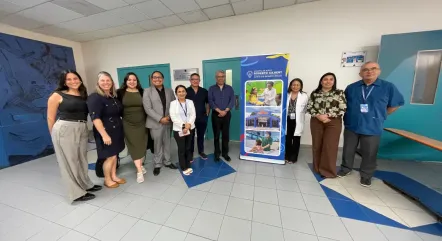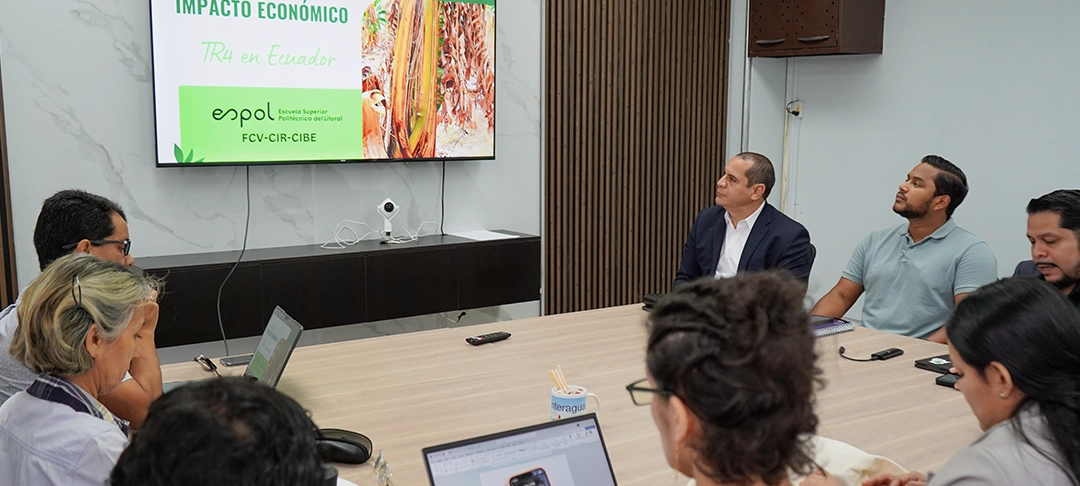



In a key meeting for the strengthening of Ecuadorian agriculture, authorities from the Escuela Superior Politécnica del Litoral (ESPOL)—including María Isabel Jiménez Ph.D. (Dean of FLS), Ramón Espinel Ph.D. (Director of CIR), Freddy Magdama Ph.D. (CIBE Researcher-Professor), Paúl Herrera Ph.D. (Researcher-Professor), and representatives from the Research Results Transfer Office (OTRI)—received Econ. Richard Salazar, Executive Director of the Association of Banana Marketing and Export (ACORBANEC). The objective of the meeting was to consolidate strategic alliances and define the foundations for a national innovation agenda for the banana sector.
This approach seeks to articulate ESPOL's scientific capabilities with the real needs of the industry and the territory, ensuring that the production of one of the country's main non-oil export products is backed by cutting-edge technological solutions.
Science to Tackle Critical Challenges
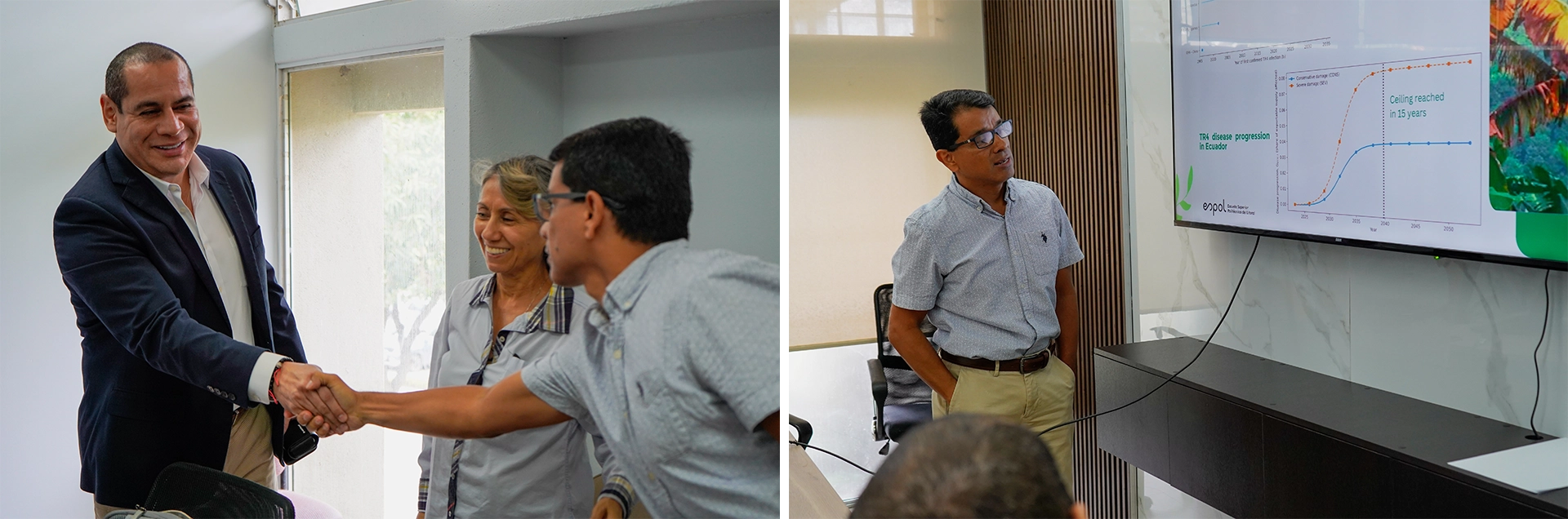
One of the fundamental pillars of this agenda is the fight against phytosanitary threats, specifically Fusarium TR4. During the meeting, preliminary results of economic projections regarding the pathogen's impact on the country were presented, emphasizing the need to develop science-based solutions to:
Strengthen biosecurity on plantations through protocols validated by academia.
Develop resistant varieties using technologies based on mutagenesis and gene editing.
Foster local capacity building through technology transfer with other prestigious international centers to address other issues such as Bacterial Moko and Black Sigatoka.
A Firm Step Toward Sustainability
For ESPOL, this space represents the commitment of its faculties—such as the Faculty of Life Sciences (FLS)—to the sustainable development of the country. By joining forces with organizations like ACORBANEC, the goal is to position Ecuador as a benchmark in research and the generation of evidence-based solutions. This effort promotes the creation of a robust applied research program that provides technical assistance relevant to the current challenges of the productive sector, coordinates currently dispersed capabilities, and closes the existing gaps between science, territory, and industry.