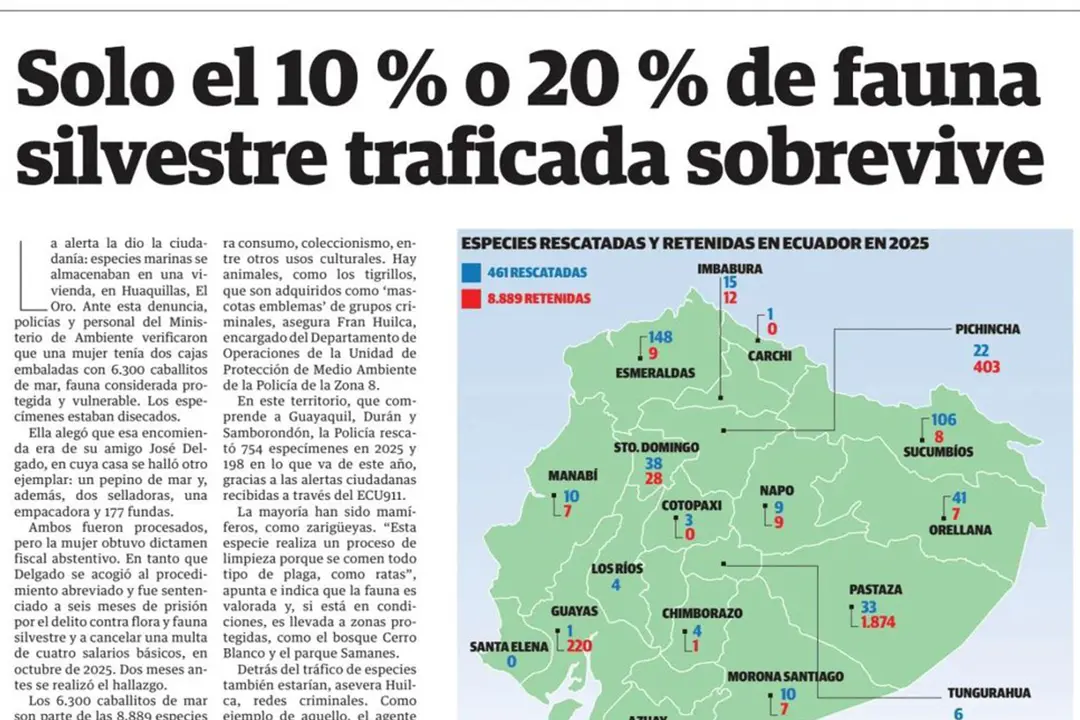

Illicit wildlife trafficking in Ecuador has reached critical levels, threatening ecosystem balance and public health. In a recent report by El Universo, Julián Pérez, a research professor at the Life Sciences Faculty (FLS), analyzed the alarming figures regarding species seizures in the country.
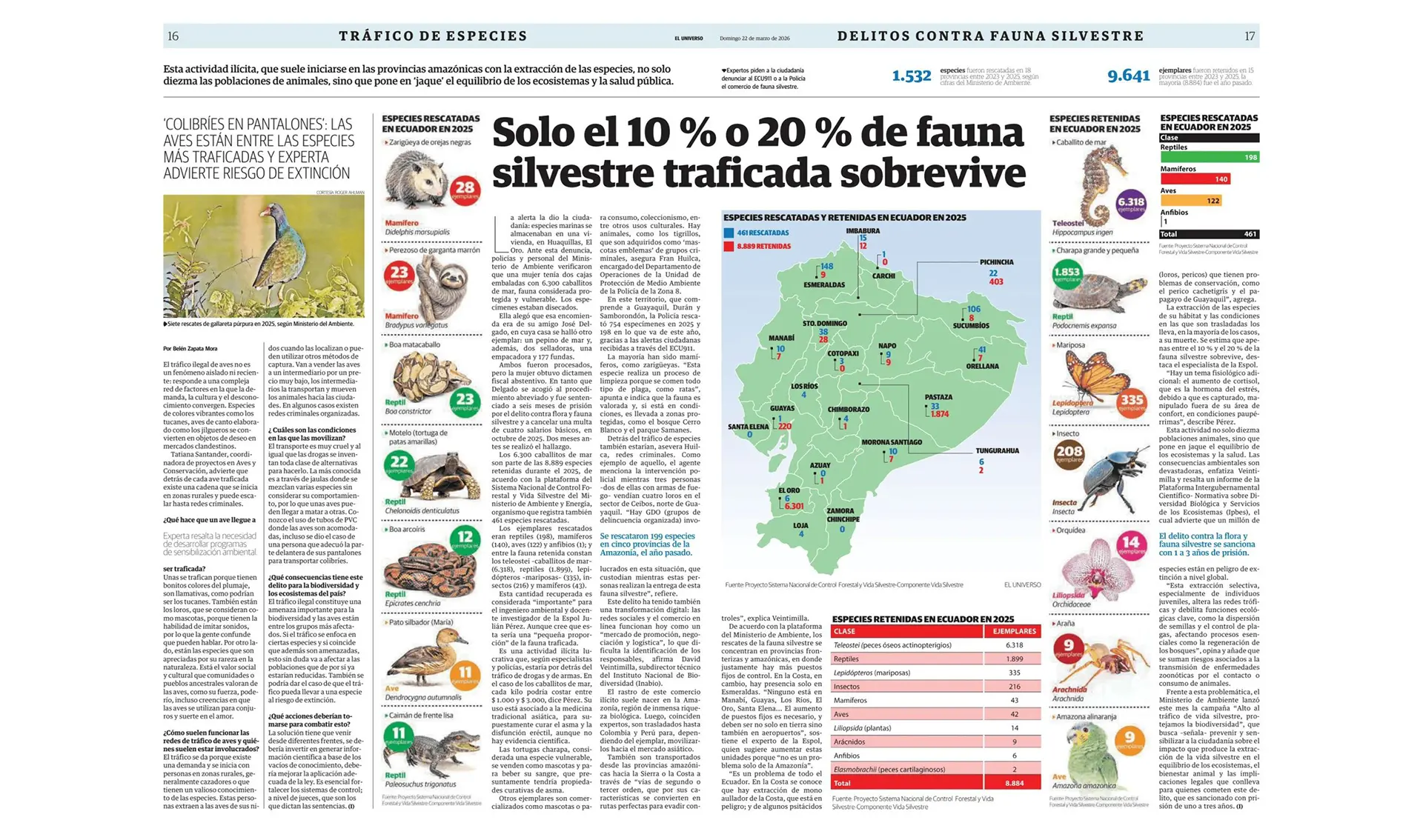
According to data from the Ministry of the Environment, 8,884 specimens of wildlife have been seized so far in 2025. Among the most affected species are seahorses (teleosts), reptiles, butterflies, and mammals such as opossums and sloths. For the ESPOL professor, these figures represent only a "small proportion" of the actual trafficked fauna due to the complexity of illegal trade networks.
The report highlights that, due to cruel transport conditions and the stress of captivity, only a minimal fraction of the animals removed from their habitat manages to survive. Pérez emphasizes that this activity not only decimates animal populations but also alters trophic webs and weakens key ecological functions, such as seed dispersal and pest control.
In addition to environmental damage, species trafficking significantly increases the risk of zoonotic diseases. The FLS calls on the public to report the sale of wildlife and reminds everyone that crimes against wild flora and fauna are punishable by 1 to 3 years in prison.