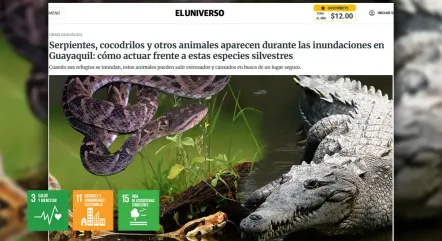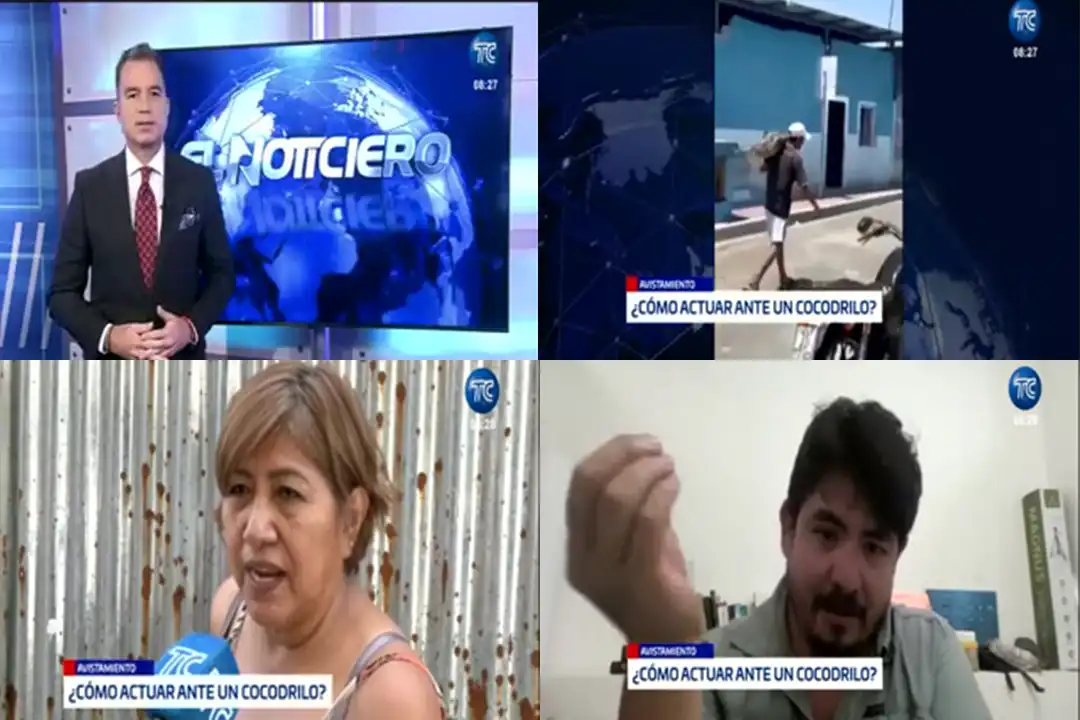

Public concern was sparked in Guayaquil after a video went viral showing a man carrying an American crocodile (Crocodylus acutus) on his shoulders, with its jaws and limbs bound. The incident opened a debate on the presence of this species in urban tidal branches such as the Estero Salado, as well as the appropriate way the public should respond to sightings.
FLS-ESPOL professor and researcher Julián Pérez demystified the perceived inherent aggression of these reptiles during everyday encounters across the city:
"Have you ever heard of someone being bitten by a crocodile? Honestly, I never have in Guayaquil. If we encounter an animal there, it is simply resting and will soon move on; that happens in many encounters with wildlife. Sometimes, as people, we think we need to rescue it, help it, or that it poses a threat, when in reality, if there is no further interaction, nothing happens at all," the specialist explained.
Legal Implications and Reporting Channels
Beyond the unnecessary physical hazards of handling wild animals, Pérez emphasized the legal framework safeguarding these protected and vulnerable species:
"Even in the absence of physical abuse, the possession of wildlife and its constituent parts—meaning any part of its body—constitutes an environmental crime," the biologist warned.
Pérez noted that, in flagrant cases of capture, detention, or unlawful transport of specimens, citizens should immediately dial 911 or file a formal complaint with the State Attorney General’s Office (Fiscalía General del Estado) through specialized environmental crime units. In Ecuador, the unlawful holding, possession, or trafficking of protected wild species is categorized under the Comprehensive Organic Criminal Code (COIP), carrying prison sentences ranging from one to three years.
ESPOL reaffirms its call for peaceful coexistence, respect for natural habitats, and non-intervention with wildlife native to Guayaquil's estuarine ecosystem.