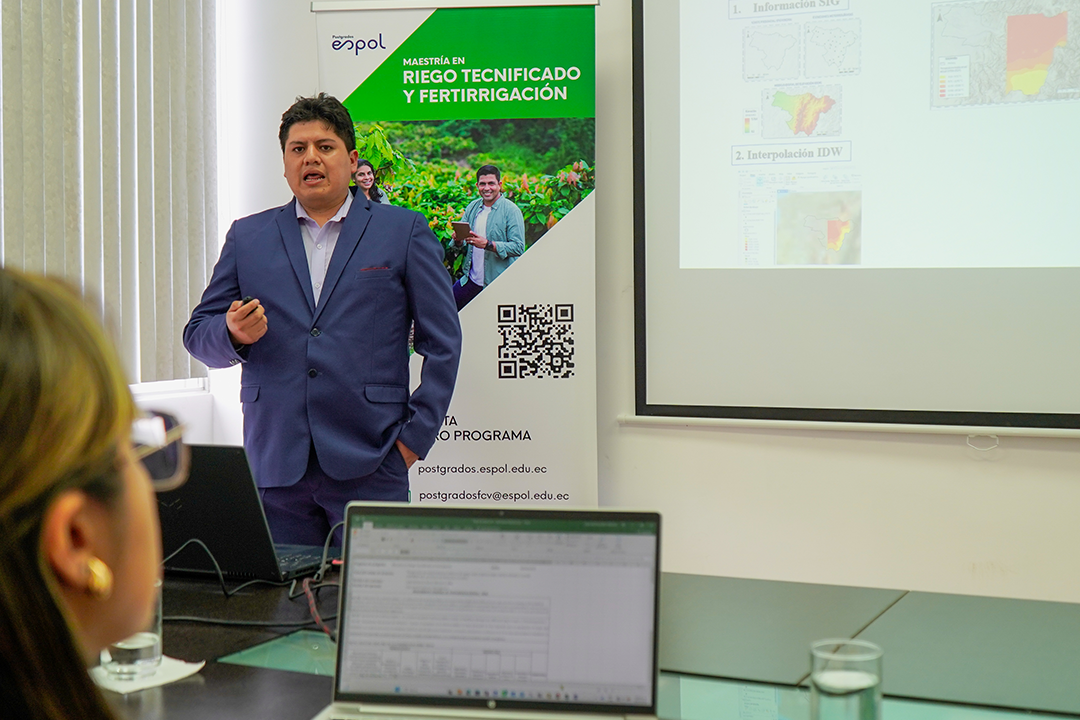


Food security and agricultural sustainability across the inter-Andean region demand predictive modeling tools to adapt water management to the impacts of climate variability. Grounded in this objective, the oral defense was held for the postgraduate thesis titled: “Projection of potato, maize, and quinoa water requirements under climate change using CROPWAT 8.0 in Pichincha province, Ecuador,” presented by Julio Espinoza.
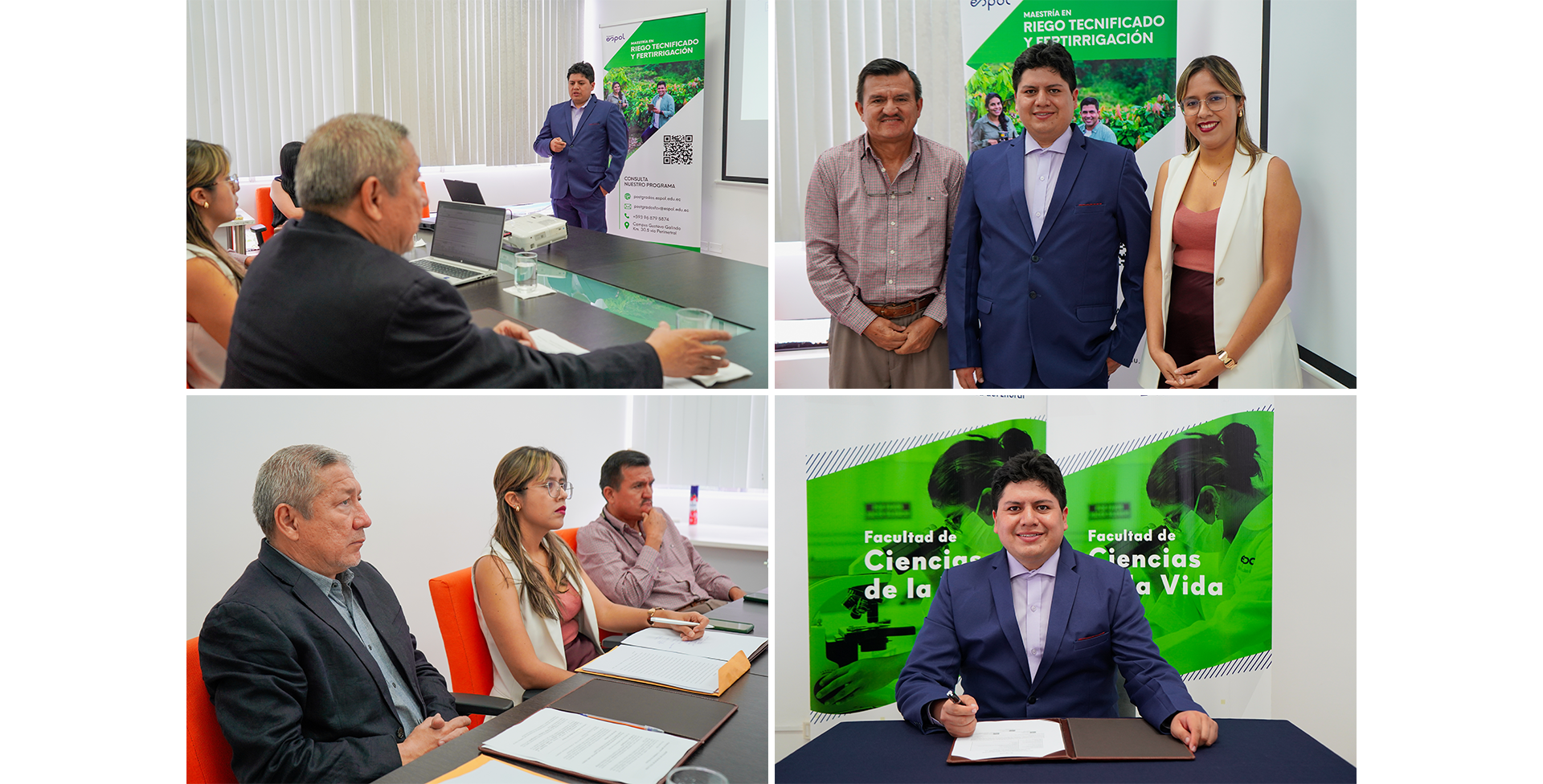
The research was conducted under the academic supervision of Robinson Peña Murillo, Ph.D., and evaluated by an examination committee comprising Paúl Carrión Mero, Ph.D., M.Sc. Randon Ortíz Calle, and M.Sc. Lady Bravo Montero. Utilizing the agronomic modeling tool CROPWAT 8.0, the study evaluated future projections of evapotranspiration and irrigation requirements for three staple Andean crops: potato, maize, and quinoa. The resulting data provide critical technical criteria for farm- and canton-level water planning in Pichincha, mitigating crop water stress and optimizing pressurized irrigation scheduling amid global climate change.
With the approval of this research project, FLS-ESPOL welcomes a new specialist dedicated to delivering scientific and technological solutions to the pressing water and agri-food challenges facing the country.
Apply today to our Master's Program in Pressurized Irrigation and Fertigation >>>