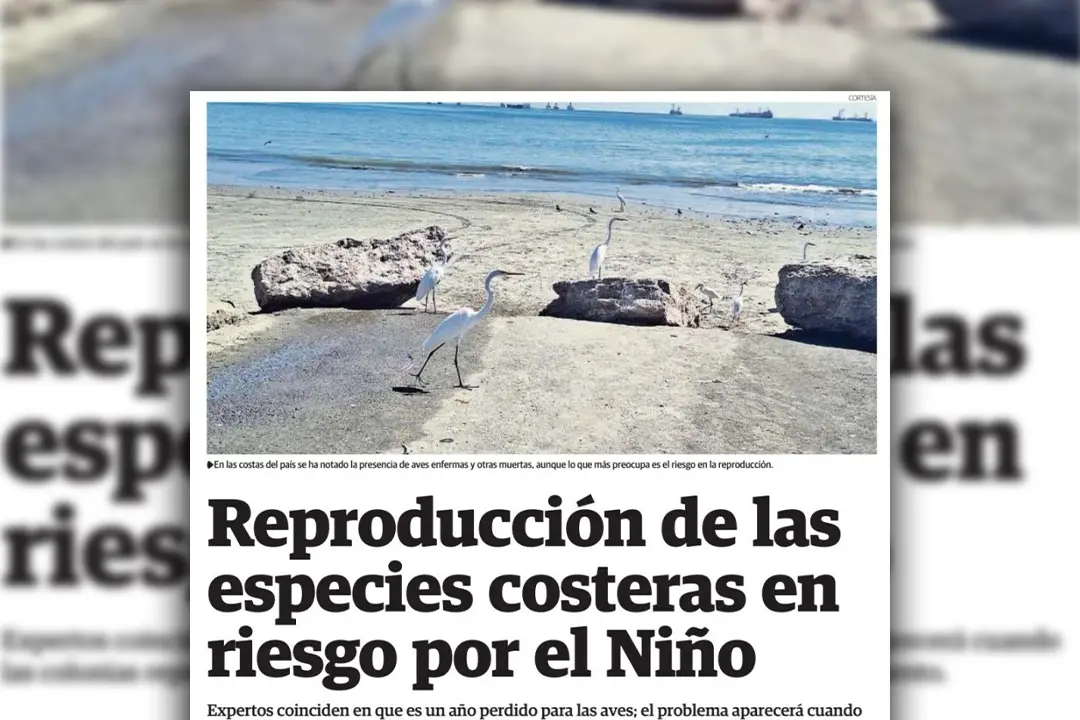
Beyond the immediate mortality of seabirds observed along the nation's coastlines, the most critical and silent toll driven by El Niño conditions strikes marine wildlife reproductive cycles. Faced with the deepening of prey fish and the depletion of surface nutrients, adult birds endure negative energy balances that compromise colony viability.
Paolo Piedrahita, Ph.D., biologist and professor at FLS-ESPOL, explained that long-lived species such as blue-footed boobies live for decades, yet reach sexual maturity late—between eight and ten years of age. Consequently, each nesting season is essential to maintain population equilibrium.
"When food becomes scarce, adults prioritize self-preservation. Rather than laying eggs, brooding chicks, or guarding nests, they simply suspend breeding. In the Galapagos, it has been documented that during periods of food shortages, birds skip reproduction entirely that year and resume the next," Piedrahita stressed.
Offspring Impacts and Epidemiological Vulnerability
According to the researcher, this breeding suspension creates a true demographic void, as virtually no new cohorts fledge throughout the season. Furthermore, for pairs attempting to nest, the consequences remain severe:
- Nest desertion: Parents must cover much greater distances to forage, spending prolonged periods away from the nest. This reduces feeding frequency for chicks and sharply increases nestling mortality before development finishes.
- Reduced size and body mass: Piedrahita noted that prior Galapagos studies demonstrate prolonged scarcity produces undersized individuals with lower body mass.
- Epidemiological vulnerability: The expert emphasized that nutritionally depleted, underweight birds exhibit heightened susceptibility to pathogens, such as avian influenza, due to compromised immune responses.
The ESPOL specialist's findings highlight that the core ecological challenge extends far beyond cataloging dead birds stranded on beaches; it demands close monitoring of reproductive failure and long-term demographic disruptions across both continental and insular shorelines.