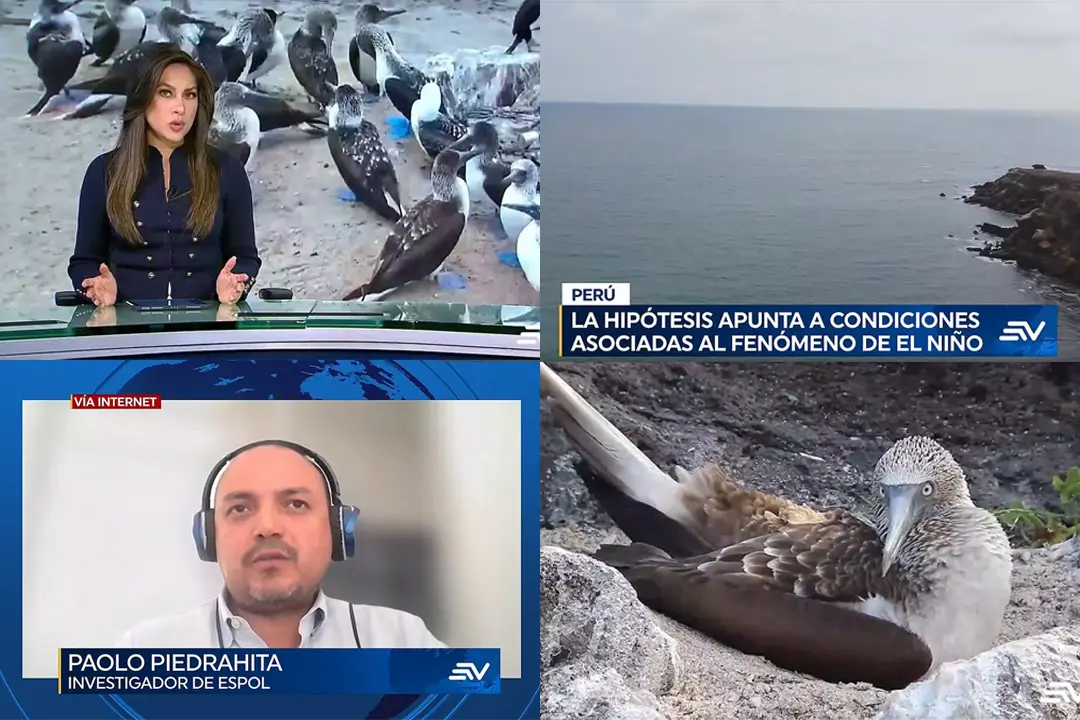


The emergence of disoriented, dead, or severely emaciated seabirds across both the beaches of Tumbes (Peru) and the coastline and urban areas of Ecuador has raised alarms among the scientific community and environmental authorities. The phenomenon is linked to ocean thermal anomalies and conditions associated with El Niño, which force forage fish away from surface waters or drive them into deeper layers of the water column.
Addressing the situation, Paolo Piedrahita, Ph.D., research professor at ESPOL, analyzed the ecological dynamics these species encounter while attempting to forage. According to the specialist, seabirds instinctively track their prey, which is distributed by ocean circulation patterns and water mass convergences:
"Seabirds follow their food source, and this food is distributed by currents arriving from both the south and the north. It is therefore a cascading effect triggered by sea surface temperatures, intricately tied to oceanographic drivers such as marine currents," Piedrahita explained.
The researcher also emphasized the critical mid- to long-term demographic fallout of these mortality events, extending far beyond the immediate visible toll:
"The birds perishing now are individuals that will never reproduce. Because they fail to breed, we will see a long-term decline due to a deficit of new recruits that should have entered the breeding population, but will simply not be there," the biologist warned.
The report underscores the urgent need to strengthen wildlife management protocols and coordinate institutional contingency plans, while advising the public not to handle sick or stranded specimens and to notify environmental authorities promptly for triage at specialized care centers.