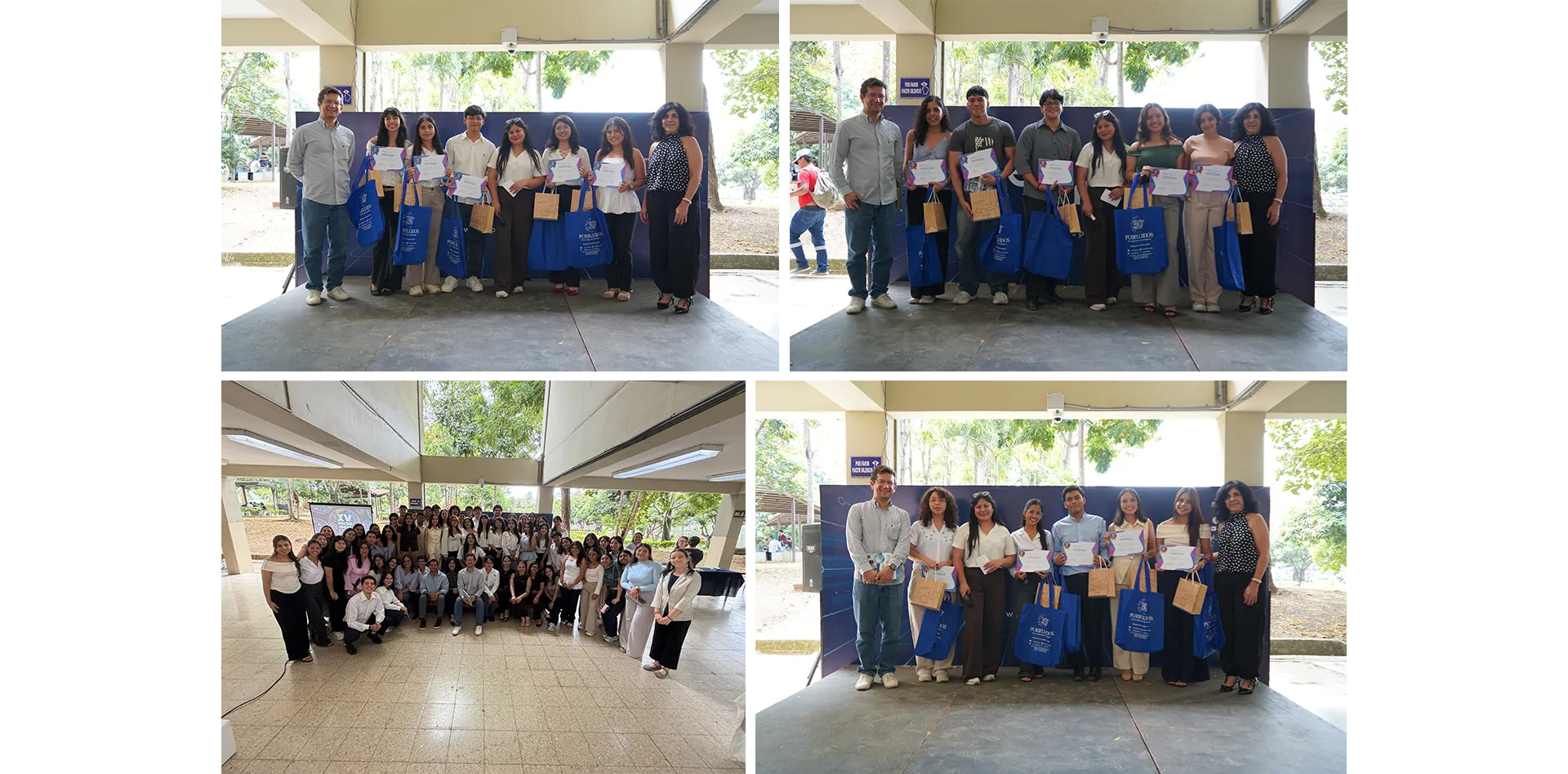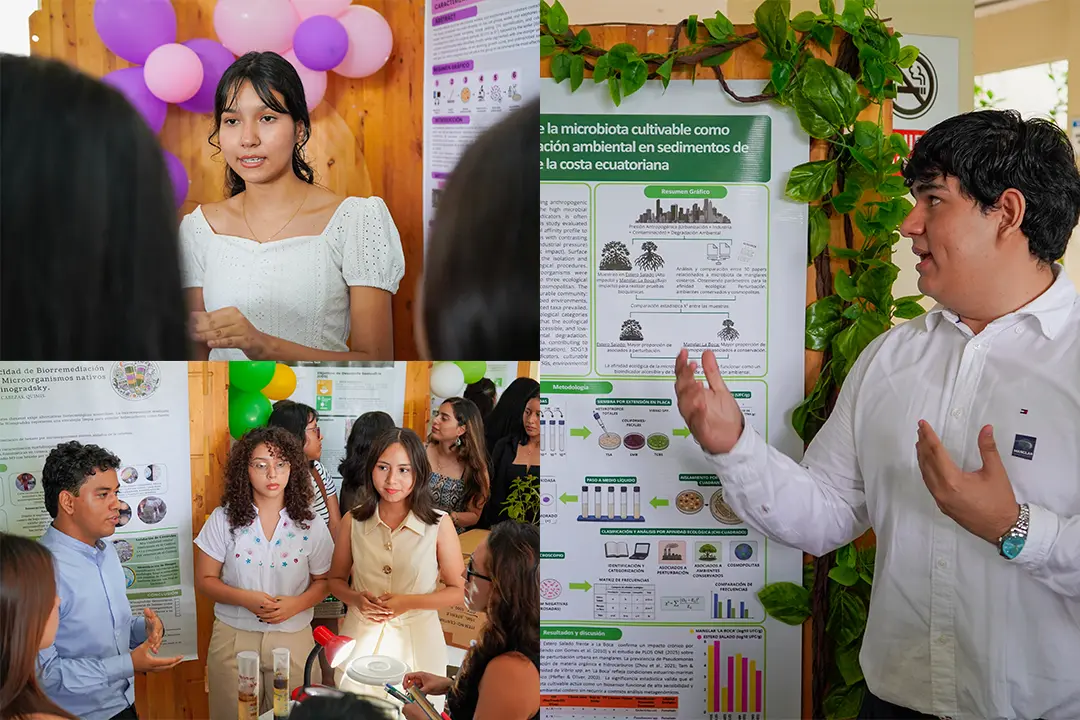


On August 17, 2026, the 15th edition of Microideas de Laboratorio took place—a flagship educational initiative of the Faculty of Life Sciences (FLS) directed by prominent research professors Marynes Montiel, Ph.D., and Juan Manuel Cevallos, Ph.D. The competition aims to foster classroom-based research, analytical rigor, and the translation of microbiological solutions to real-world challenges.
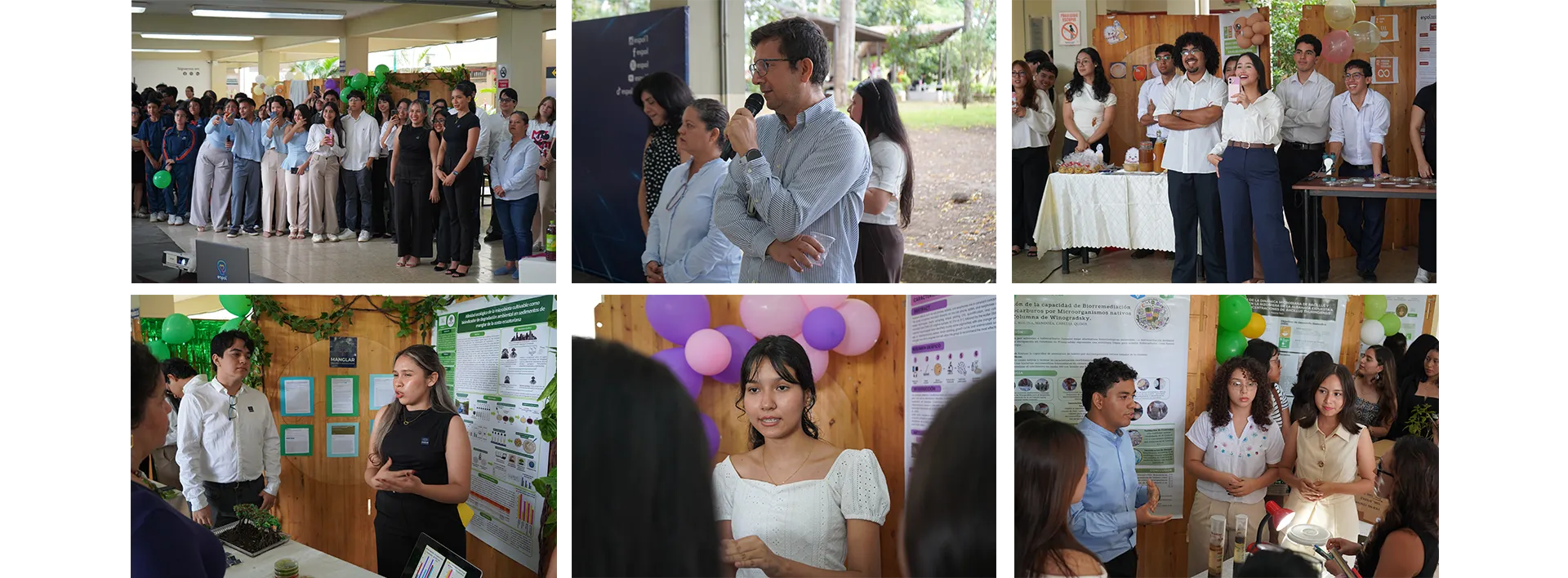
During the academic session, multidisciplinary teams presented their applied experimental projects, each featuring a distinct visual identity and methodology:
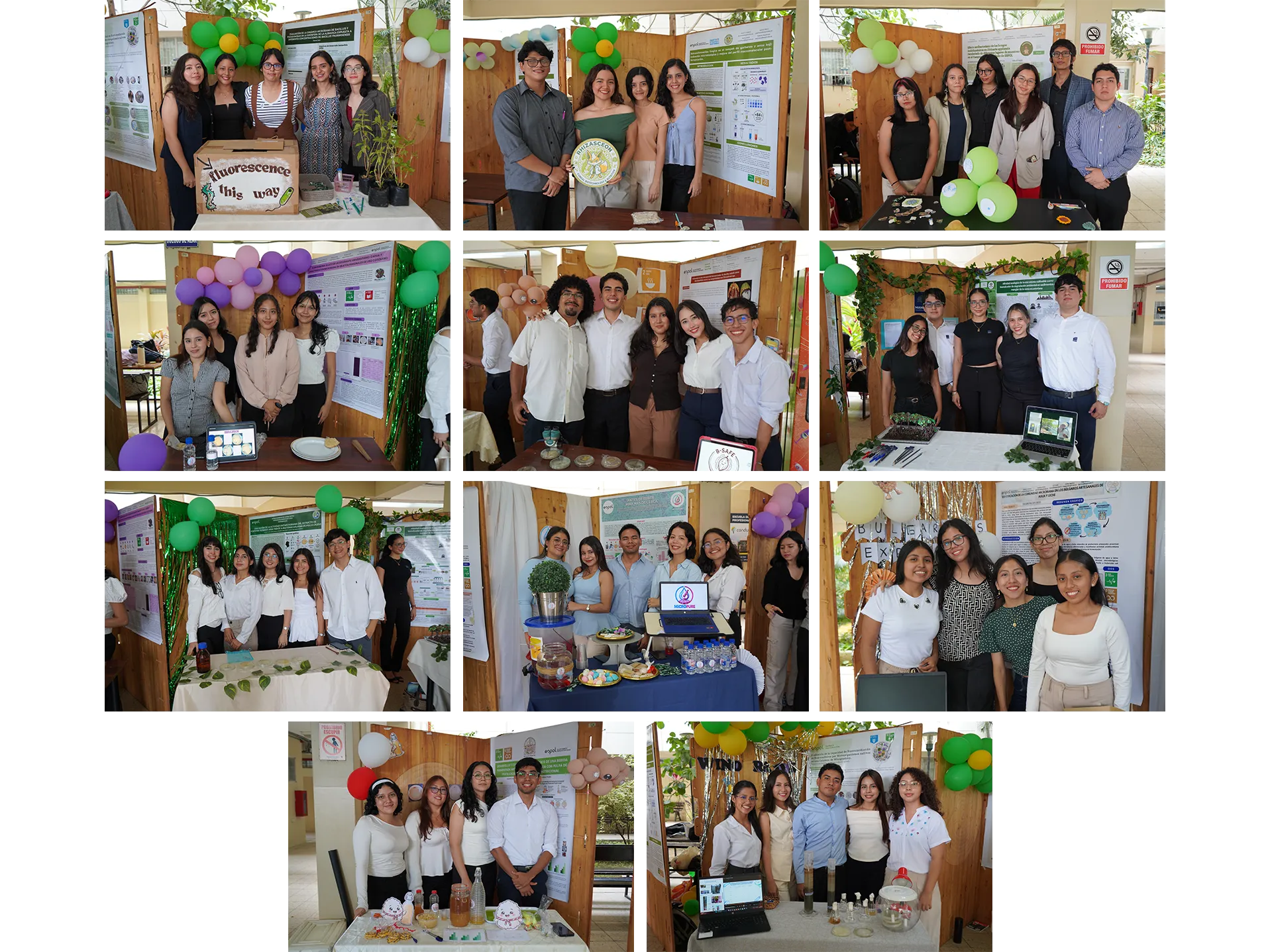
RHIZASCEON: Fungal biotransformation in chickpea tempeh and koji rice: Microbiological assessment and post-fermentation macromolecular profile enhancement. Team: María Jaime Murillo, Valeria Navarrete Torres, Kevin Cristóbal Bajaña, and Camila Mora Abad.
Winogradsky LAB: Evaluation of hydrocarbon bioremediation capacity by native microorganisms from a Winogradsky column. Team: Cristhian Villón, Carol Molina, Emily Cabezas, María Mendoza, and Mirella Quimis.
B-SAFE CACAO: In vitro evaluation of the biocontrol potential of Bacillus subtilis against Moniliophthora roreri and its compatibility with Trichoderma spp. Team: Romelia Gómez, Dillan Loor, Esteban Moncayo, Alina Ochoa, and José Vaca.
BioHoja: Isolation and identification of fungi and bacteria from leaf litter on ESPOL's Gustavo Galindo Campus and analysis of their degradation potential. Team: Walter Granda Sandoval, Melanie Macías Quimí, Lorena Recalde Albán, and Melanie Sánchez Posiligua.
RIZOMA TECH: Assessment of Bacillus and Pseudomonas microbial dynamics in the basil rhizosphere exposed to varying concentrations of Bacillus thuringiensis. Team: Roxana Orellana, Mishell Caisaguano, Gemma Andrade, Maite Polit, and Melanny Poveda.
Liquencitos: Antibacterial effect of endolichenic fungi in the lichen Dirinaria applanata collected across sampling sites on ESPOL's Gustavo Galindo Campus. Team: Elizabeth Caba, Ámbar Echaiz, Eva Escobar, Julieth Fogacho, Bryan Luna, and Galo Nicola.
Grupo Manglar: Comparison of mangrove sediment microbiota between the Estero Salado (Guayaquil) and La Boca Mangrove (San Jacinto, Sucre Canton) as indicators of coastal ecological health. Team: Gonzalo Flores Álava, Andrea Monard Monteverde, Arthur Pérez Duque, María Doménica Real Anchundia, and Ariana Esther Santana Cirino.
Hermanitos Bulgaritos: Formulation and microbiological quality control of an artisanal water kefir probiotic soda as a nutritional alternative. Team: Elizabeth Carriel, Eilyn Calderón, Mathew Parada, Luiggi Montaño, and Allyson Pineda.
Microtouch: A university student's hidden microbiome: Comparison of microbial diversity on everyday personal items. Team: Doménica Cristiansen, Emilia Saraí Gonzáles, Ariadna Guale, and Emily Villarroel.
Algas antimicrobi: Evaluation of the antimicrobial activity of edible seaweed extracts against foodborne gastrointestinal bacteria and their potential application in antimicrobial biodegradable films. Team: Valeska Correa Fajardo, Francesca Hernández, Saray Quishpe Herra, Mercedes Vega Colcha, and Enrique Zambrano Panchana.
Bulgaritas Explorers: Characterization of the microbial community present in water and milk kefir grains. Team: Liz Cando Tierra, Olga Arévalo Quimí, Valeria Guamán Buñay, Aslhey Aguirre Orrala, and María de los Ángeles Robles García.
MicroPure: Microbiological analysis of drinking water dispensers across ESPOL and potential health risks for users. Team: Geanella López Rojas, Danna Aráuz Bravo, Krisley Alvarado Solís, Katty Rodríguez Cedeño, and Derek Aquino Castro.
Following evaluation panel deliberations, the edition's winners were announced:
First Place: Winogradsky LAB
Second Place: Algas antimicrobi
Third Place: RHIZASCEON
Coordinated by the faculty's academic staff, Microideas de Laboratorio reinforces ESPOL's pedagogical model by bridging foundational scientific experimentation with the bioeconomy, environmental bioremediation, and public health.