Producción y Consumo Responsables
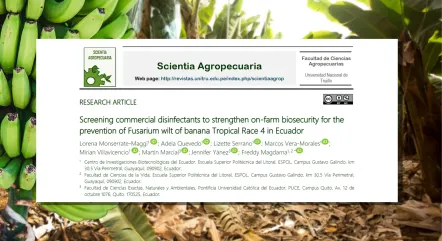
Polytechnic Science Serving the Agricultural Sector: LFS-ESPOL Researchers Validate Strategies Against Fusarium TR4
In Ecuador, bananas are much more than just a fruit; they are the heart of our agricultural economy, representing approximately 2% of the national GDP. However, the shadow of Banana Fusarium Wilt (Tropical Race 4)—a persistent and devastating fungus—poses a constant threat. In this scenario, prevention is not just an option; it is a necessity for survival.
DEPUREMOS Project: Technical Innovation for Food Safety in Isla Puná, Huaquillas, and Puerto Jelí
With the aim of ensuring the safety of bivalve mollusks and opening new commercial opportunities for local harvesting communities, the induction and technical evaluation sessions for the DEPUREMOS project ("Mollusc Depuration in Ecuador for Food Safety and Market Expansion") were successfully conducted.
Technological Empowerment in the Field: ESPOL and Maquita Train Farmers in the Bulubulu Basin
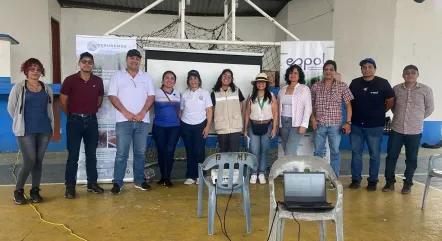
In the heart of the San Vicente community, within the Yaguachi canton, the Life Sciences Faculty (LFS) took a significant step toward agricultural modernization. In collaboration with the Maquita organization, the workshop "Technological Tools in Agriculture" was held—an initiative designed to bridge the digital divide in the rural sector.
ESPOL and UGent Launch Project to Strengthen Food Security and the Mollusk Market in Ecuador
On September 17, 2025, the official launch of the project “Mollusk Depuration in Ecuador for Food Security and Market Expansion” took place. This initiative is driven by the Escuela Superior Politécnica del Litoral (ESPOL) and Ghent University (UGent), with the support of the Technical University of Machala, the Technical University of Manabí, and the State University of Southern Manabí.
First Cohort of the Master’s Program in Plant Health Successfully Completes Thesis Defenses
The Faculty of Life Sciences at ESPOL hosted the thesis defense sessions for the first cohort of the Master’s Program in Plant Health. The evaluating committee—composed of Dr. Adriana Santos, the respective tutors for each student, and the program coordinator, Dr. Lisbeth Espinoza—assessed seven master’s candidates who presented their degree projects, contributing innovative proposals for the sustainable agricultural development of the country.