
In Ecuador, bananas are much more than just a fruit; they are the heart of our agricultural economy, representing approximately 2% of the national GDP. However, the shadow of Banana Fusarium Wilt (Tropical Race 4)—a persistent and devastating fungus—poses a constant threat. In this scenario, prevention is not just an option; it is a necessity for survival.
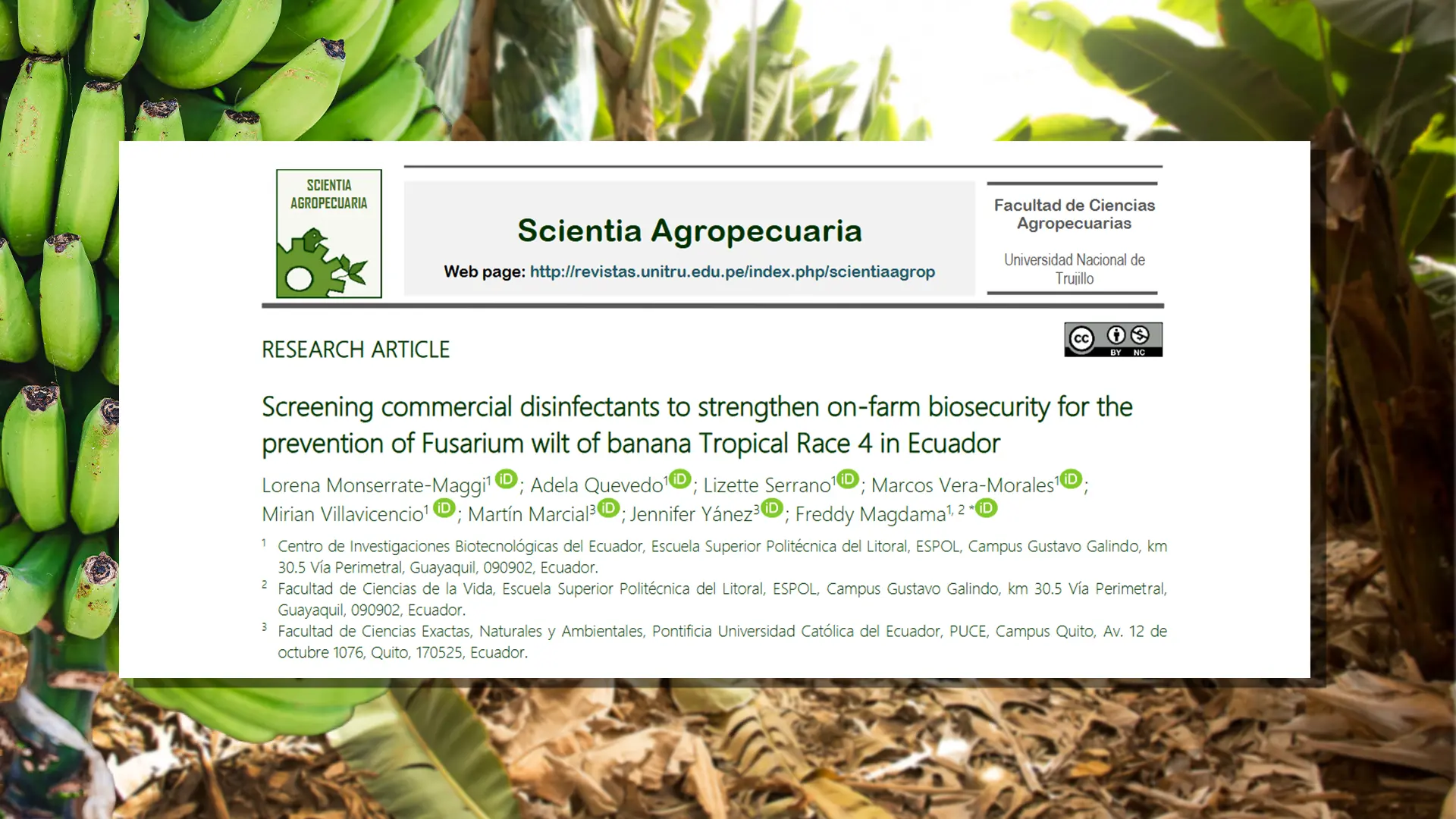
Recently, Dr. Freddy Magdama, a research professor at the Life Sciences Faculty (LFS) and CIBE-ESPOL, led a critical study published in the scientific journal Scientia Agropecuaria. The objective: to determine the actual effectiveness of the disinfectants currently used to stop the fungus before it enters our plantations.
The Invisible Enemy: Chlamydospores
The study highlights a fundamental distinction that every producer must understand: not all states of the fungus are the same. While common spores are relatively easy to combat, Fusarium produces chlamydospores—resistance structures that can survive in the soil for decades, waiting for the opportune moment to attack.
"Our approach was to test commercial products under the most challenging conditions possible, simulating field reality where soil and organic matter are present," the research team explains.
Key Results: Which Products Won the Battle?
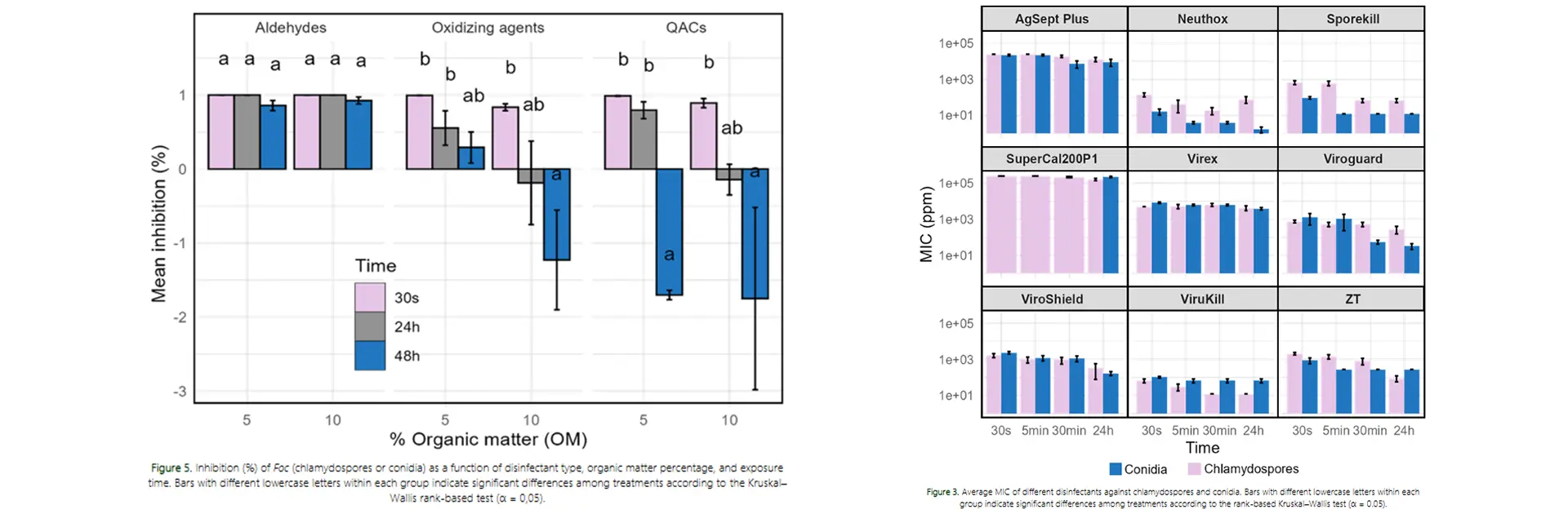
The research evaluated 9 commercial disinfectants belonging to different chemical groups. The findings offer a clear guide for decision-making in biosafety:
Most Effective: Disinfectants based on Aldehydes and Quaternary Ammonium Compounds (QACs) demonstrated superior capability in neutralizing chlamydospores.
Time and Concentration Factors: The study determined that to achieve total disinfection (100% inhibition), it is vital to adhere to recommended contact times and concentrations.
A "quick wash" may not be sufficient against the fungus's resistant structures, the chlamydospores. Resistance to Debris: One of the greatest challenges is that organic matter (such as mud on boots or tires) often inactivates disinfectants. The winning products maintained their efficacy even under these conditions (up to 10% organic matter), making them ideal for footbaths (pediluvios) and disinfection arches on farms.
Impact on the Community and the Sector
This work not only raises ESPOL’s academic profile but also provides a practical tool for farmers. By knowing which product to choose and how to use it, producers can optimize their resources and, most importantly, reduce the risk of introducing a disease that could be catastrophic for the country.
From the Life Sciences Faculty, we remain committed to generating knowledge that moves beyond the laboratory and transforms into real solutions for today's challenges, achieving a more sustainable agriculture.
READ THE FULL PUBLICATION