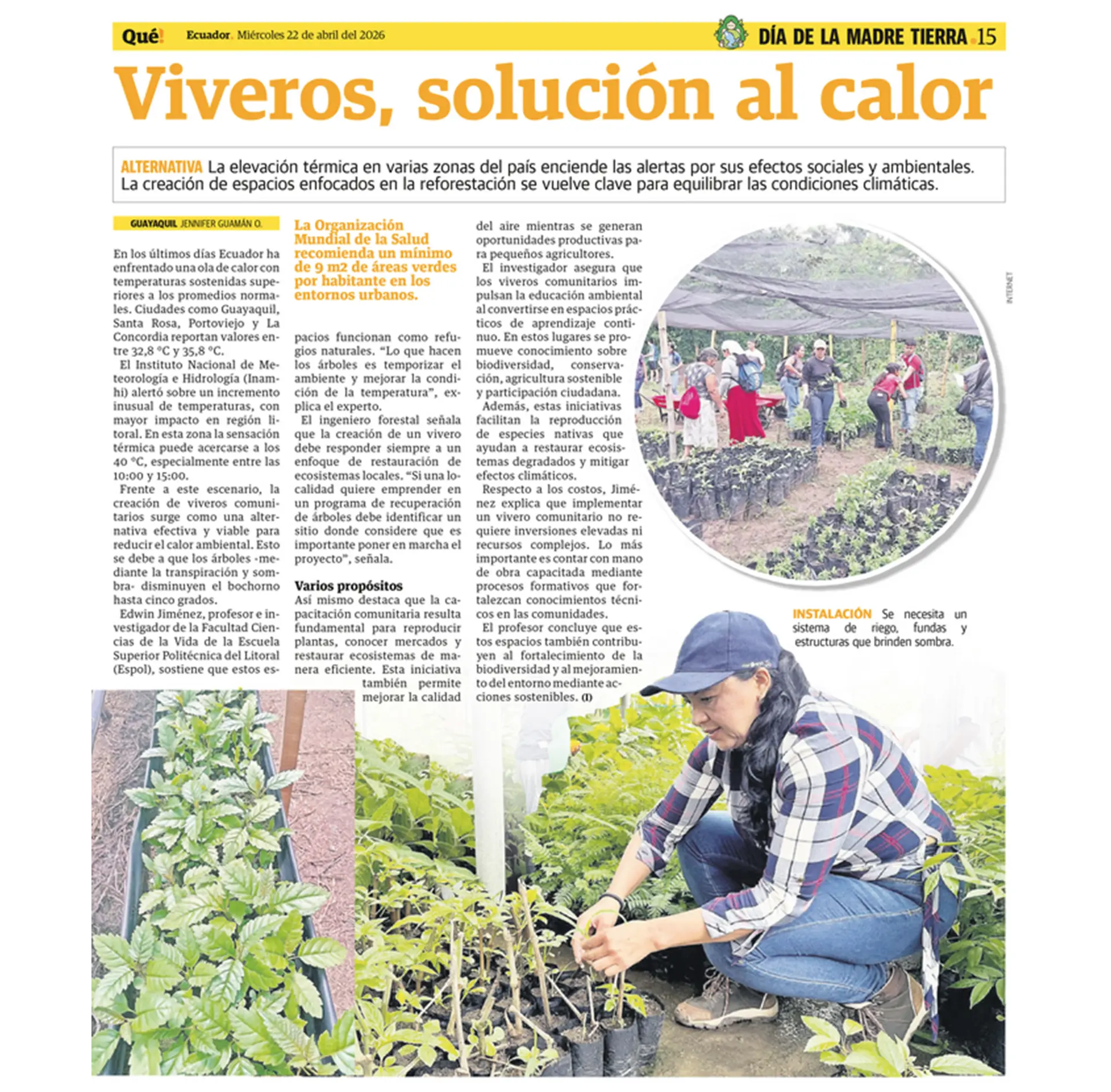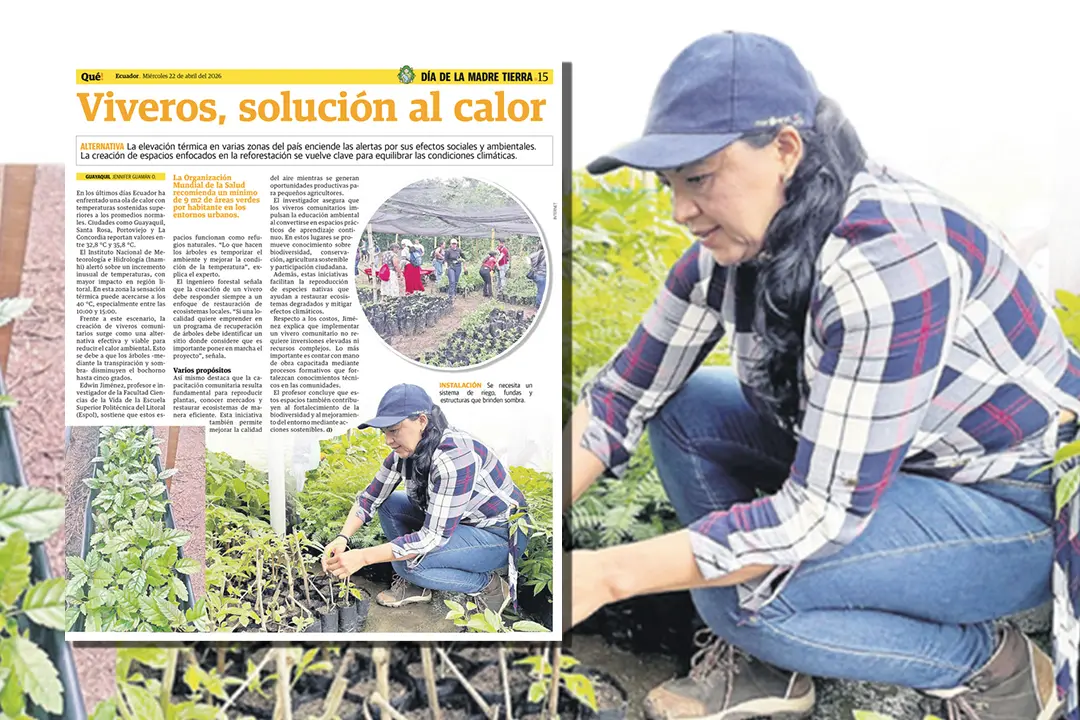



Given the unusual temperatures that have affected various cities across the country, reaching peaks of up to 35.8 °C and heat indices close to 40 °C, Edwin Jiménez, Eng., a research professor at the Faculty of Life Sciences (FLS), highlights the creation of community nurseries as a viable and sustainable alternative to balance climatic conditions.
As Jiménez explains, trees act as natural regulators that can reduce thermal discomfort by up to five degrees through the process of transpiration. Implementing nurseries in urban environments not only allows for the reproduction of native species for reforestation but also transforms these spaces into centers for continuous learning about biodiversity and conservation.
The ESPOL expert emphasizes that a well-managed nursery is fundamental for efficiently restoring degraded ecosystems. "This initiative improves air quality and generates productive opportunities for small-scale farmers and local communities," states the FLS professor. Furthermore, he highlights that these projects do not require high investments, but rather solid community organization and technical training.