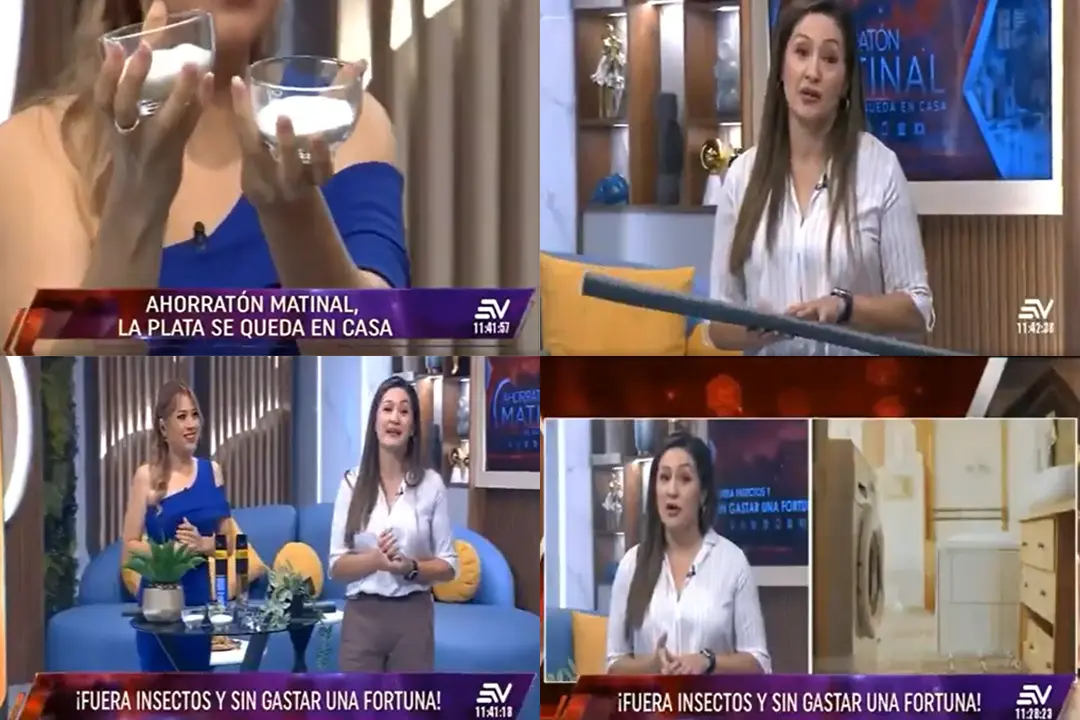

During the rainy and winter season, the presence of insects inside households tends to rise as pests seek shelter. In response, the repeated use of commercial insecticides can represent not only a continuous expense, but also a potential toxicity risk for young children and pets if handled improperly.
Lisbeth Espinoza highlighted that the primary key lies in prevention and strategic hygiene. Keeping countertops and floors clean, disposing of trash promptly, and preventing water accumulation in flowerpot trays or patios are the first steps to curb the proliferation of vectors such as mosquitoes and cockroaches.
Accessible and Eco-Friendly Solutions
Among the practical alternatives shared by the researcher, key methods include:
White vinegar and baking soda: Ideal for disinfecting surfaces and countertops, removing food residue, and creating a barrier that deters pests.
Lemon with whole cloves: A natural, aromatic repellent to place along windowsills or ant entry points.
Sugar mixtures with baking soda or borax: Placed in a controlled manner inside bottle caps or strategic areas—strictly out of reach of children and pets—to eliminate ants and cockroaches.
Physical barriers (door draft stoppers/sweeps): Simple installations that prevent direct access of insects and rodents from the outside.
Through these recommendations, academia reaffirms its commitment to transferring scientific knowledge to the community, promoting healthier and more sustainable environments.