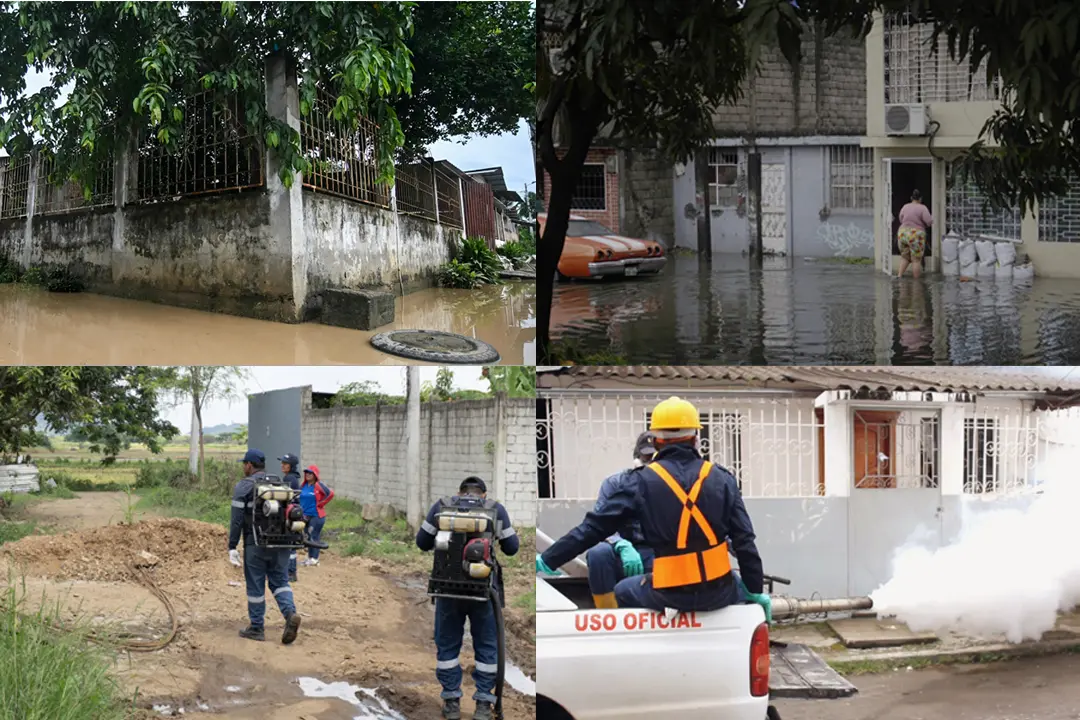
Sudden temperature changes, flooding, and rainwater stagnation resulting from climate events such as El Niño create the ideal environment for vector proliferation and the rise of transmissible diseases. In light of this reality, research professors from the Faculty of Life Sciences (FLS) analyze current epidemiological risks and emphasize the importance of community prevention.
High humidity and heat conditions accelerate the reproduction cycle of the Aedes aegypti mosquito, the vector responsible for transmitting dengue, zika, and chikungunya. ESPOL experts point out that the surge in cases not only overwhelms healthcare systems but also demands active entomological surveillance and a shift in household water storage habits. Early detection of symptoms such as high fever, joint pain, and rashes is crucial to preventing severe complications.