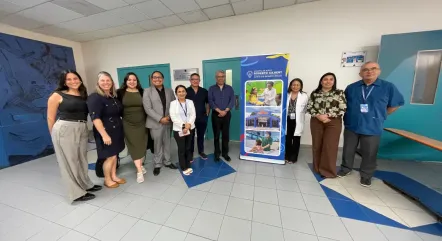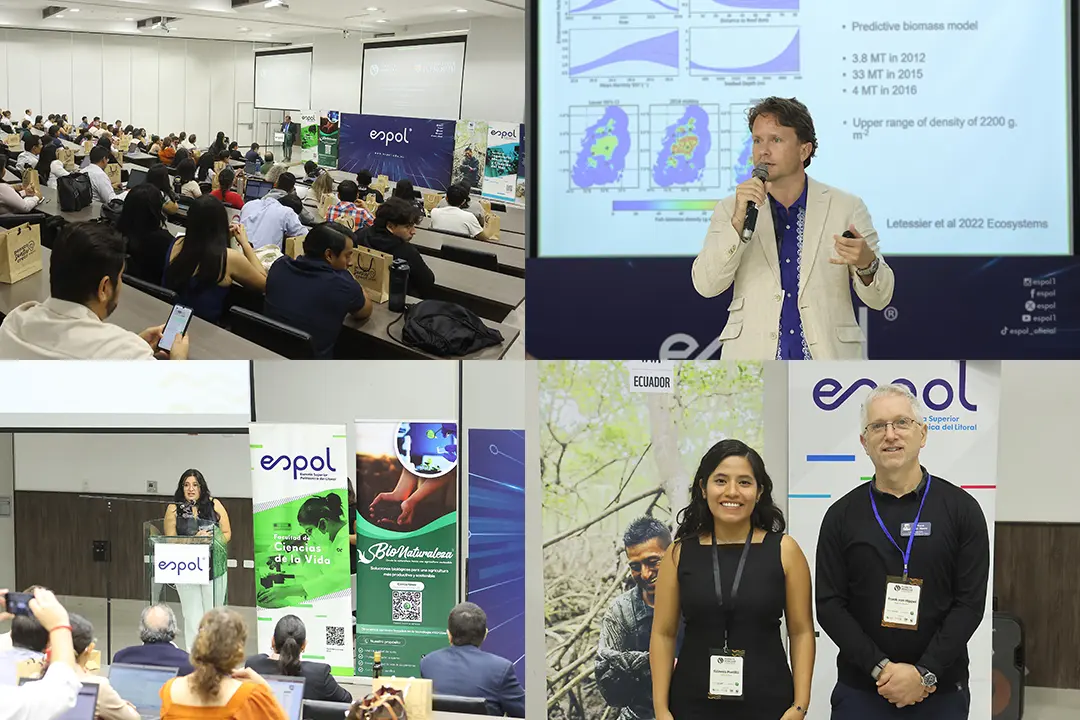

The first edition of the Planeta Manglar (Planet Mangrove) Congress concluded after three days that brought together researchers, environmental law experts, managers, and communities around one of the most strategic ecosystems on the Ecuadorian coast.
The first day, dedicated to "Biodiversity and Management of Mangrove Resources and Community," featured 11 presentations and 4 panels exploring the links between biodiversity science and participatory mangrove management. The day included the international keynote lecture by Tom Letessier, Ph.D., titled "Monitoring biodiversity and managing ecosystems: from open ocean systems to mangroves," which offered a comparative perspective from open ocean systems to coastal mangroves.
The second day broadened the focus toward "Blue Economy and Ecosystem Services," featuring 14 presentations and 4 panels. Highlights included interventions by Frank Von Hippel, Ph.D., with "Ecotoxicology and biodiversity of mangrove forests," and attorney Jesús Mardomingo on the Blue Economy. Addressing ecotoxicology, ecosystem services, and the blue economy in relation to mangroves is no coincidence: these ecosystems provide benefits ranging from carbon sequestration and coastal protection to the economic livelihood of fishing communities. Understanding their ecological health, quantifying their value, and designing frameworks to protect them are urgent and interdependent tasks.
The third day concluded with action: attendees participated in a mangrove planting event on May 20, a gesture that encapsulates the spirit of the congress—knowledge gains true meaning when translated into a real commitment to the territory.
With more than 25 presentations and 8 panels across two academic days and one day of fieldwork, Planeta Manglar demonstrated that dialogue between science, policy, and community is not only possible—it is necessary.