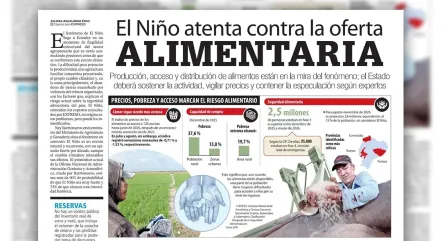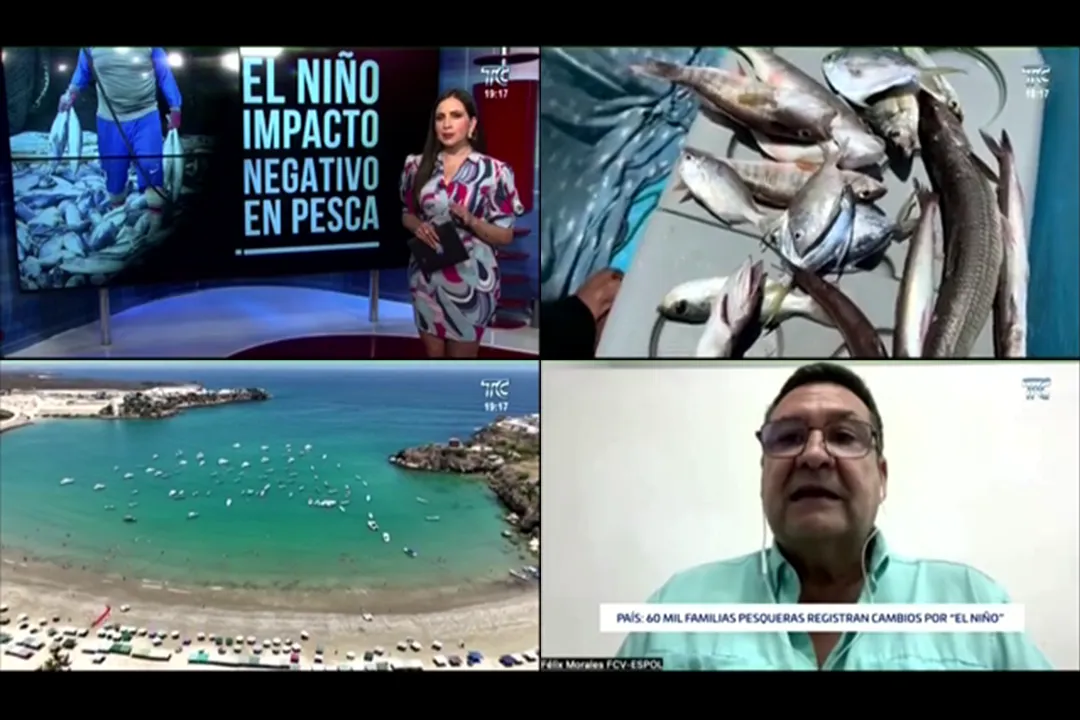

Thermal anomalies across Ecuadorian Pacific waters continue to trigger profound disruptions in coastal oceanographic and biological dynamics. Against this backdrop, marine biologist and Faculty of Life Sciences (FLS-ESPOL) research professor Félix Morales, Ph.D., weighed in as a scientific expert to assess the ecological toll that El Niño exerts on marine populations.
In his technical analysis, the ESPOL specialist noted that anomalous increases in sea surface temperatures directly disrupt primary productivity and nutrient availability throughout the water column. As an immediate consequence, vital fishery resources—such as sardines and anchoveta—decline significantly due to the collapse of optimal foraging conditions.
Morales also highlighted species-specific biological responses: while large, highly mobile pelagic fish like tuna possess the swimming capacity to migrate toward more favorable, nutrient-rich oceanic regions in search of prey, smaller species and crustaceans, including wild shrimp, exhibit far more constrained migratory ranges due to their body size and biological nature, suffering disproportionate population declines.