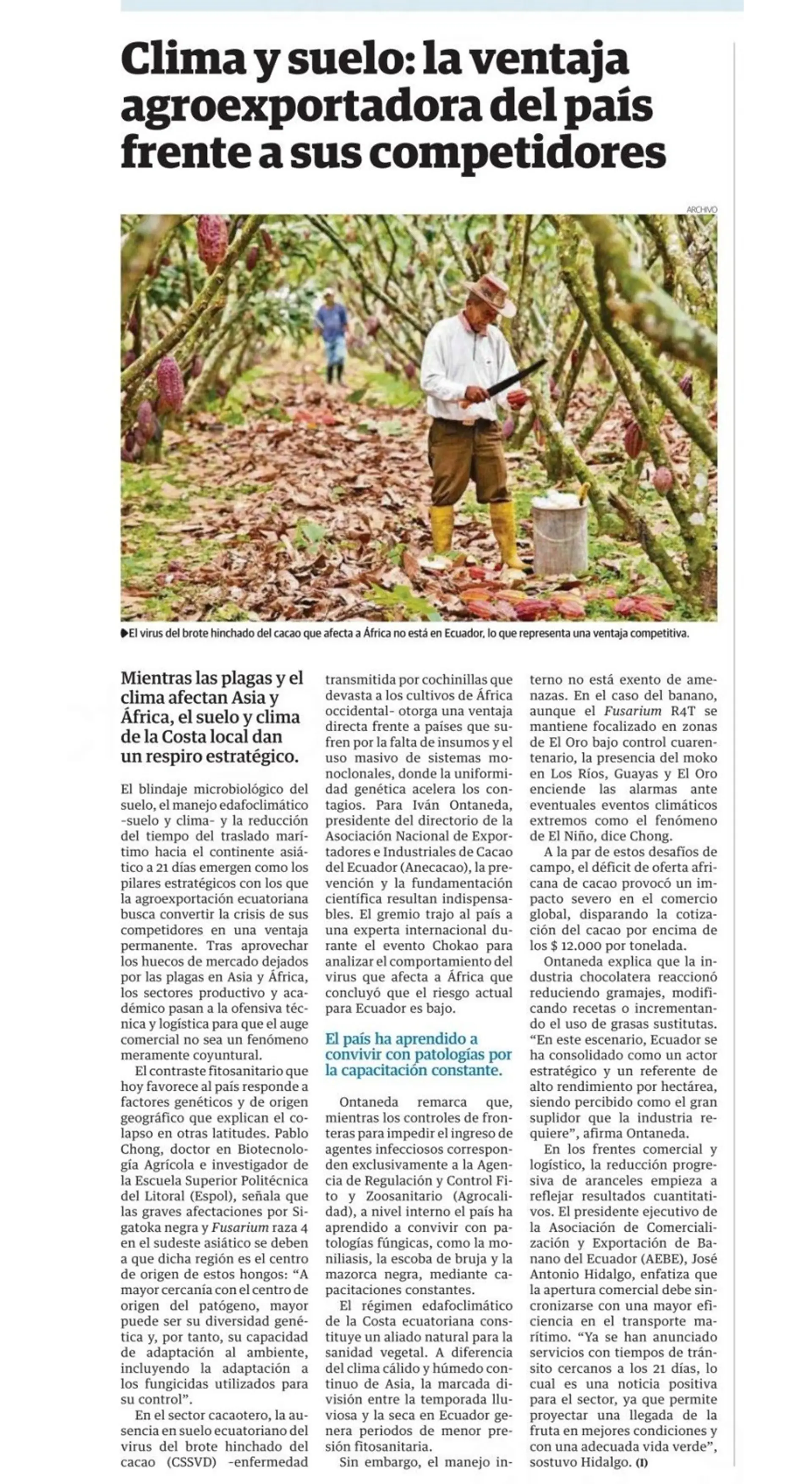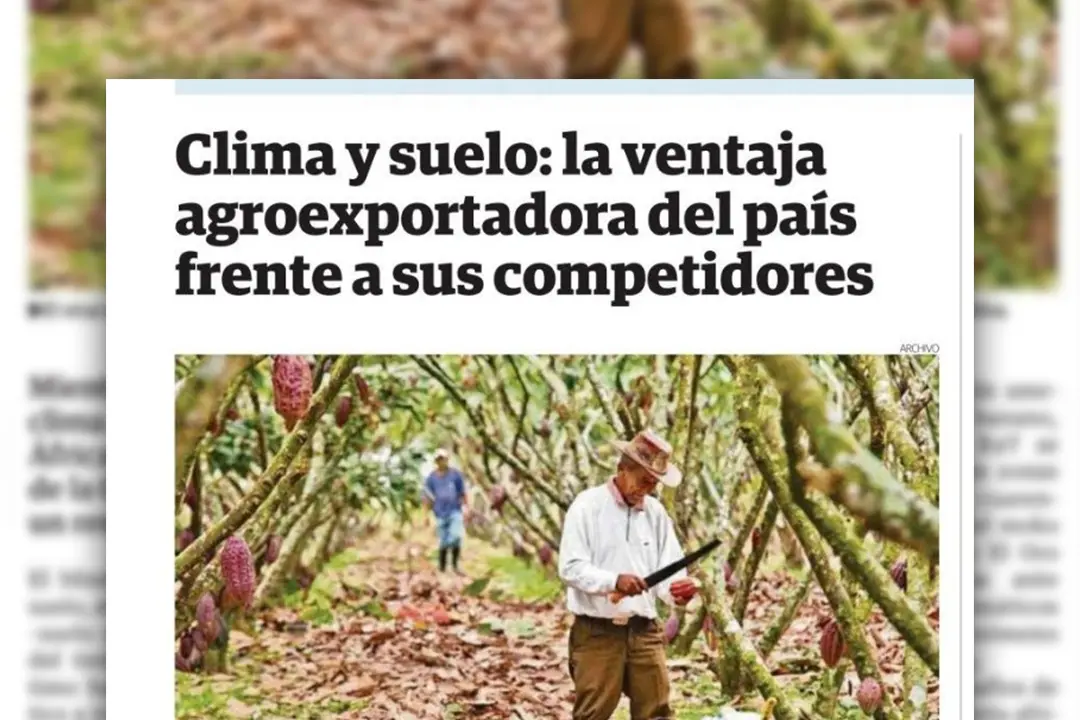

In a global landscape where crop diseases and climate change severely disrupt agricultural supply chains across other continents, Ecuador’s agro-export sector seeks to strengthen its position in key commodities such as cocoa and bananas.
Pablo Chong, Ph.D., professor at the Faculty of Life Sciences (FLS) and researcher at the Biotechnological Research Center of Ecuador (CIBE-ESPOL), noted that the severe incidence of diseases such as Black Sigatoka or Fusarium Tropical Race 4 (TR4) in Southeast Asia is closely linked to its biogeographical proximity to the evolutionary origin of these pathogens:
"The closer an area is to the pathogen's center of origin, the greater its genetic diversity can be, and consequently, the higher its adaptability to the environment—including resistance to fungicides applied for its control," the agricultural biotechnology specialist explained.
In contrast, the edaphoclimatic regime (soil and climate conditions) of the Ecuadorian coast—characterized by a distinct alternation between rainy and dry seasons—creates natural windows of reduced pathogen pressure, unlike the persistently warm and humid climate typical of Southeast Asia.
Despite these favorable conditions and the domestic absence of devastating threats such as Cacao Swollen Shoot Virus Disease (CSSVD), which heavily impacts West Africa, the ESPOL researcher emphasized that the national landscape requires ongoing vigilance.
In banana production, while Fusarium TR4 remains under targeted quarantine containment in El Oro province, Chong warned that the presence of Moko disease (Ralstonia solanacearum) across provinces such as Los Ríos, Guayas, and El Oro triggers critical phytosanitary concerns—particularly in the face of extreme climate events like El Niño, which can accelerate pathogen dispersal.
Given these dynamics, ESPOL underscores the urgent need to maintain soil microbiological surveillance, biotechnology research, and integrated pest management (IPM) strategies to safeguard the productivity, biosecurity, and international competitiveness of Ecuador's agricultural sector.