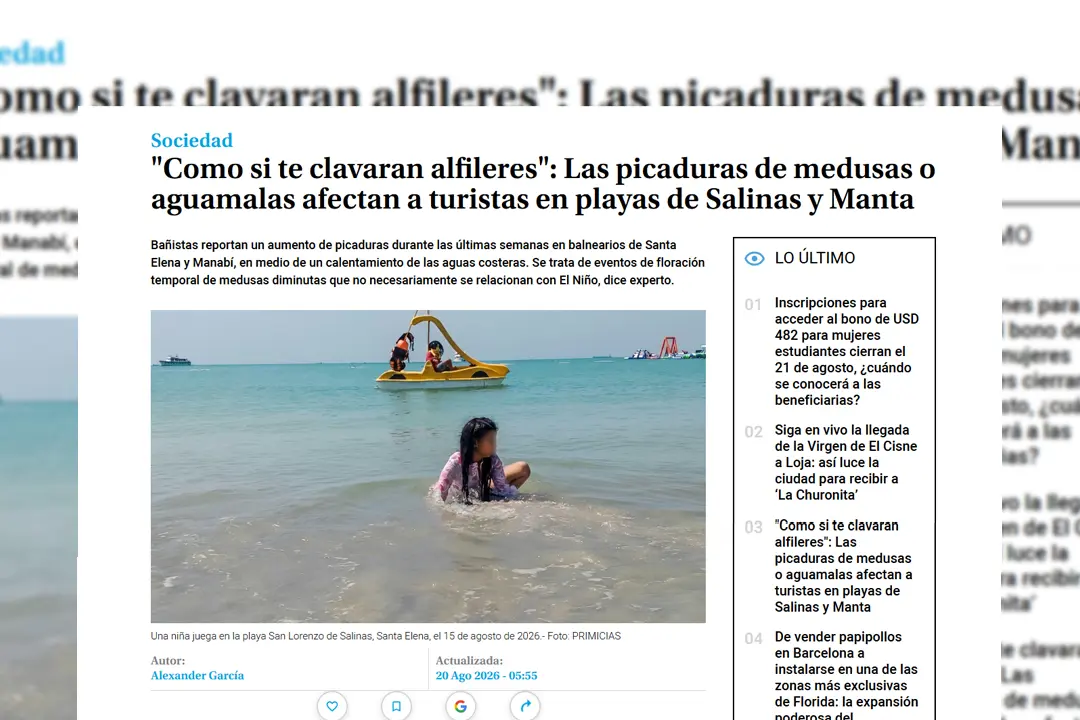


Over the past few weeks, beachgoers at destinations such as San Lorenzo and Chipipe (Salinas), as well as coastal resorts in Manta, reported intense skin irritation after entering the sea, characterized by a stinging, prickling sensation followed by rashes.
Addressing this situation, Félix Morales, Ph.D., holding a doctorate in Oceanography and serving as a faculty member in the Biology program, explained to Primicias newspaper that these stings are typically caused by microscopic or minute organisms that are virtually invisible to the naked eye in the water column, yet their tentacles discharge micro-harpoons with toxins upon the slightest skin contact.
What Causes This Phenomenon?
The specialist clarified that, rather than being directly tied to El Niño, these occurrences are mainly episodic events known as temporary jellyfish blooms:
- Environmental triggers: Polyps remain attached to the seabed until they detect favorable cues, such as increased nutrient loads from river discharges during dry periods or seepage associated with coastal settlements and infrastructure (including septic tanks).
- Short life cycle: These tiny species usually remain active in the water column for only a few weeks before completing their life cycle and settling back onto the substrate as new polyps.
Morales also noted that small marine isopods (commonly referred to as water fleas or sea lice) can be found in the sand, further contributing to these types of bites and stings.
Through these insights, academia provides scientific clarity to prevent misinformation, advising tourists to exit the water if they experience discomfort and seek medical attention if severe allergic reactions or systemic symptoms develop.