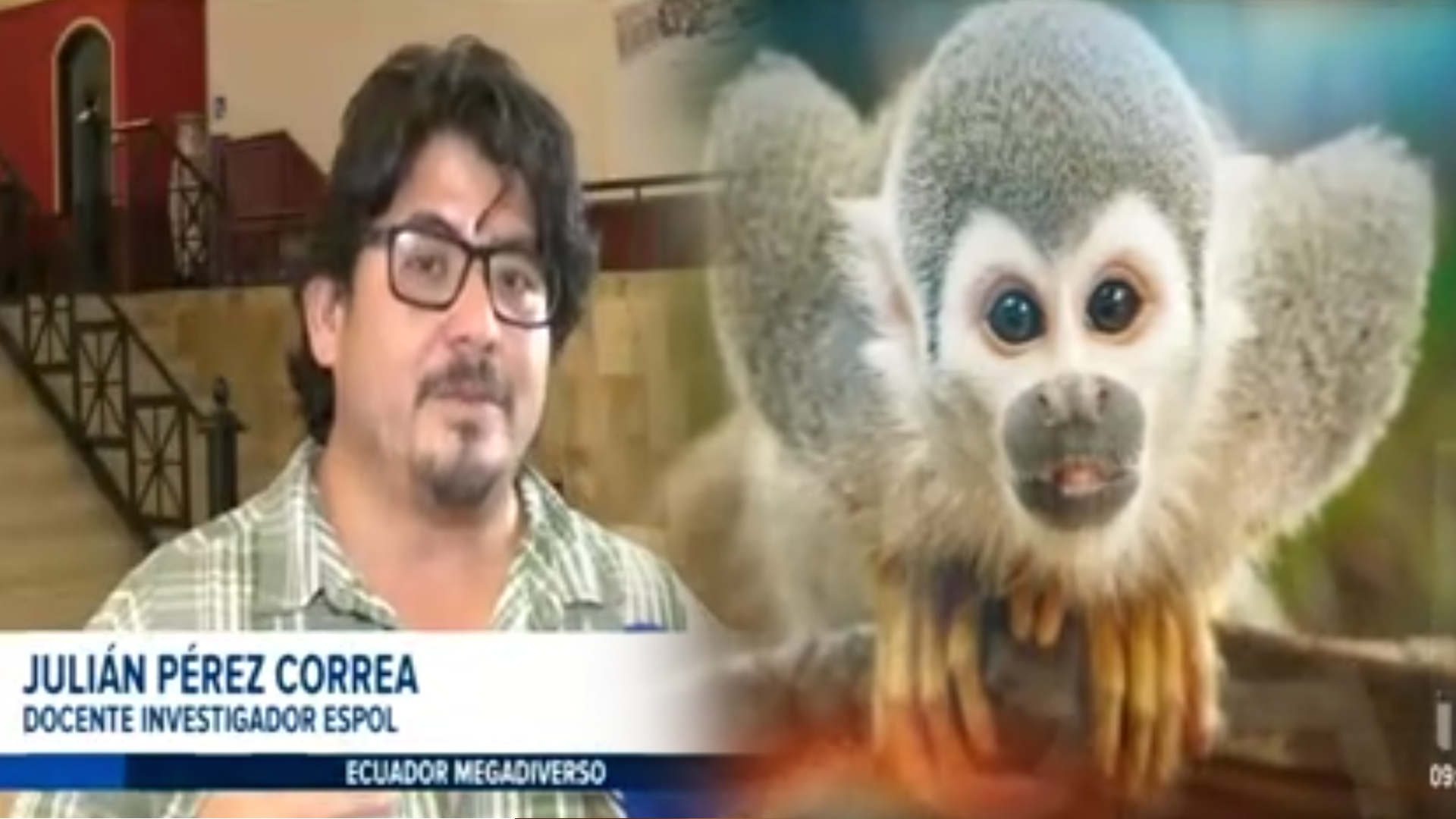

In a recent news feature for the Ecuador Megadiverso segment, Julián Pérez, a research professor at the Life Sciences Faculty (LFS), highlighted the biological richness of the "La Boca" area in San Clemente, Manabí. This region, where the river meets the sea, is home to more than 300 bird species, making it a natural laboratory for conservation and sustainable tourism.
Julián explained that these birds—both resident and migratory—act as biological connectors between diverse ecosystems. "These species maintain ecological functionality by moving between countries, escaping the cold, and using our coasts to restore their energy," the ESPOL researcher noted.
Biodiversity and Functionality:
Pelicans: They stand out as expert swimmers and divers, using their specialized morphology to feed efficiently on fish.
Herons: They act as population controllers, precisely hunting fish and small insects in mangroves and marshes.
Gulls: They fulfill a vital role as nature’s "cleaners" by being scavenger species, preventing decomposing organic matter from becoming a health risk.
Despite the fact that most of these species are not currently endangered, Julián warned about latent threats such as pollution, urban sprawl, and habitat loss due to industrial and agricultural activities.