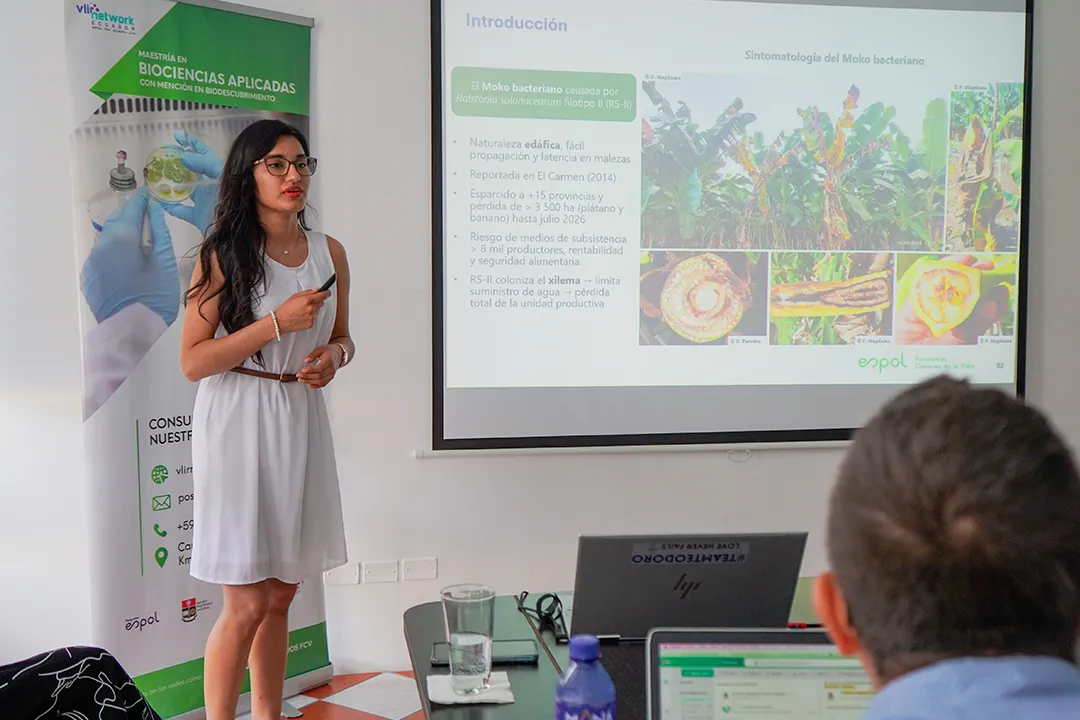

Developing genomic and biotechnological tools to confront high-impact phytosanitary diseases in Musa crops represents a strategic priority for the agricultural sector. Within this scope, the oral defense was held for the postgraduate thesis in the Master’s Program in Applied Biosciences with a concentration in Biodiscovery, presented by researcher Estefany Margarita Paredes Salgado.
The research, titled “Metagenomic exploration of microbial communities in plantain affected by Moko disease and genomic analysis of Ralstonia solanacearum phylotype II to understand its role in host dysbiosis,” was conducted under the academic supervision of Freddy Magdama Tobar, Ph.D., with co-advising by Juan Manuel Cevallos, Ph.D.
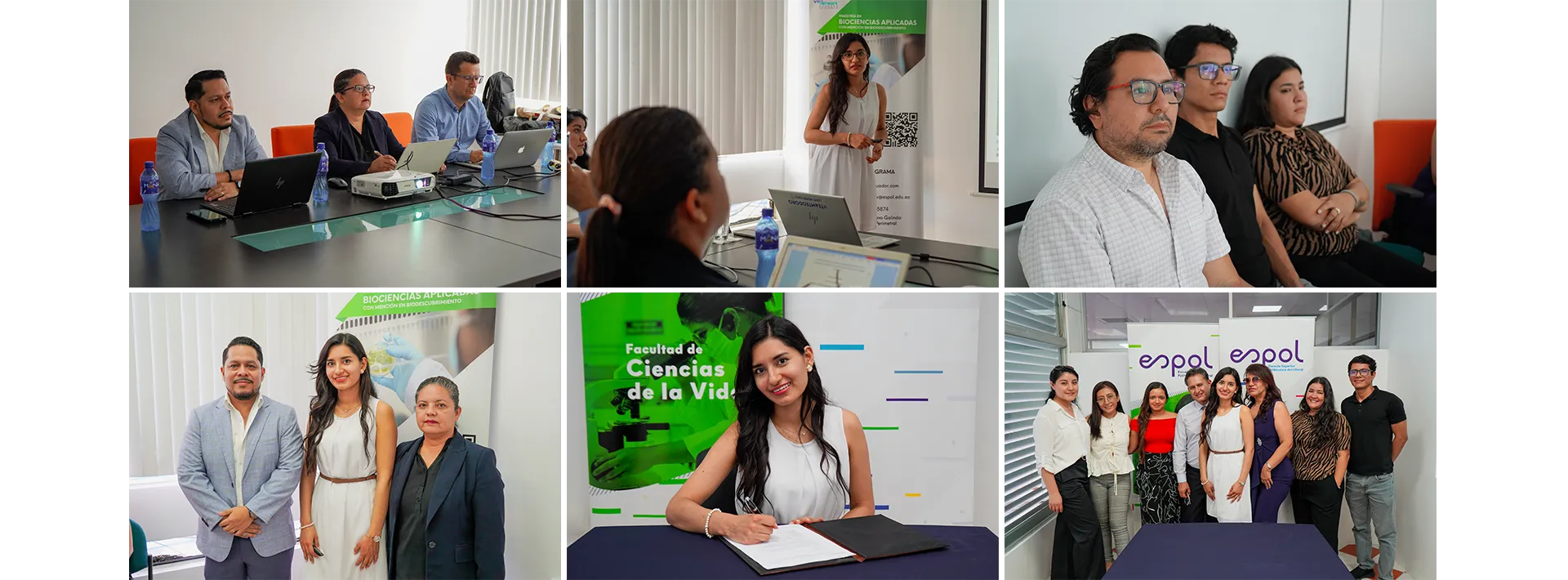
The examination committee was chaired by Ana Tirapé Bajaña, Ph.D., and composed of evaluating faculty members Eduardo Chica Martínez, Ph.D., and Julio Bonilla, Ph.D., who commended the methodological rigor of the bioinformatic pipelines and molecular analyses presented.
The study centered on the metagenomic profiling of plant-associated microbial communities in diseased tissues and the whole-genome sequencing analysis of the phytopathogenic bacterium Ralstonia solanacearum phylotype II. These findings deliver pivotal scientific evidence to unravel host microbiome disruptions (dysbiosis), laying a robust foundation for the design of future bioprotection strategies, early molecular diagnostics, and integrated pest management (IPM) frameworks against Moko disease in plantain and banana crops.