

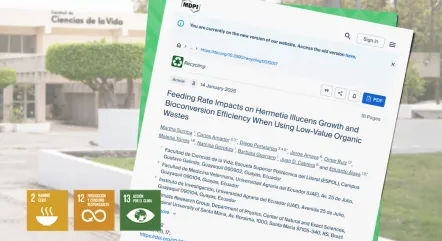
Transforming Agricultural Waste into Resources: FCV-ESPOL Faculty Evaluate the Potential of Black Soldier Fly Larvae for the Circular Bioeconomy
In rural areas across Ecuador, small-scale farming, livestock, and brewing operations generate significant volumes of organic solid waste, such as poultry manure, cattle manure, and barley brewing by-products, that frequently lack adequate waste management infrastructure.

Valeria Calero, Graduate Student in Applied Biosciences at FLS-ESPOL, Completes Research Internship at Universidad de Chile
From October 1 to 25, 2026, Valeria Abigail Calero Torres, a student from Cohort 10 of the Master’s Program in Applied Biosciences with a concentration in Biodiscovery, completed an on-site research internship at the Universidad de Chile in Santiago, Chile.

Diana Gutiérrez, Biology Faculty Member, Participates in the International Workshop on Transcriptomics for Biomedical Research
From October 12 to 16, 2026, the Center for Research on Health in Latin America (CISEAL) facilities in Quito hosted the International Workshop on Transcriptomics for Biomedical Research.
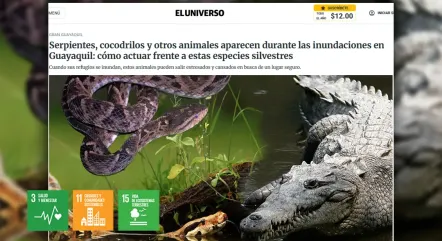
FLS-ESPOL Professor Julián Pérez Explains How to Respond to Displaced Wildlife During Floods in Guayaquil
During periods of intense rainfall and spring tides in Guayaquil, overflowing water bodies frequently force wildlife to flee their natural habitats.
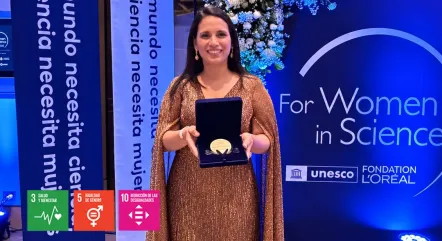
Andrea Orellana Manzano, Ph.D., Awarded the Prestigious 2026 L'Oréal – UNESCO For Women in Science Regional Award
During an official award ceremony held on October 14, 2026, in Lima, Andrea Katherine Orellana Manzano, Ph.D., was proclaimed one of the distinguished laureates of the 2026 L'Oréal – UNESCO For Women in Science Regional Award for Central America and the Andean Region.
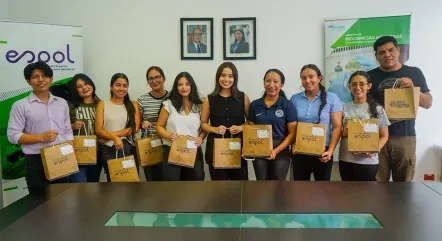
FLS-ESPOL Welcomes Cohort 11 of the Master’s Program in Applied Biosciences with a Concentration in Biodiscovery
On October 14, 2026, the Faculty of Life Sciences (FLS-ESPOL) held a welcome ceremony for the ten students comprising Cohort 11 of the Master’s Program in Applied Biosciences with a concentration in Biodiscovery.

Félix Morales Analyzes the Biological Impact of the El Niño Phenomenon on National Fisheries
Thermal anomalies across Ecuadorian Pacific waters continue to trigger profound disruptions in coastal oceanographic and biological dynamics.
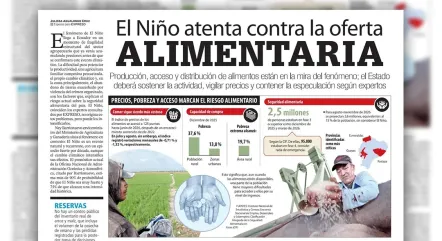
Paul Herrera Analyzes the Impact of El Niño on Food Security and Warns of Risks Driven by Economic Access and Agricultural Data Gaps
The imminent arrival of the El Niño climate phenomenon places Ecuador's agricultural sector in a state of high structural vulnerability.

Luis Bermeo Successfully Defends Master’s Thesis on Water Use Efficiency in Oil Palm in Los Ríos
The optimization of water resources in high-demand agro-industrial crops represents a strategic pillar for the sustainability of Ecuador's agricultural sector.
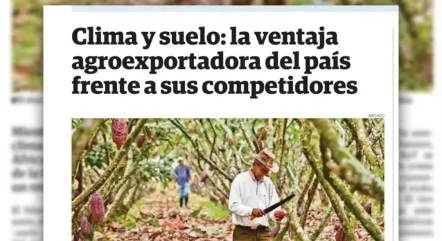
Pablo Chong Analyzes Ecuador's Phytosanitary Advantages Against Global Agricultural Pests
In a global landscape where crop diseases and climate change severely disrupt agricultural supply chains across other continents, Ecuador’s agro-export sector seeks to strengthen its position in key commodities such as cocoa and bananas.