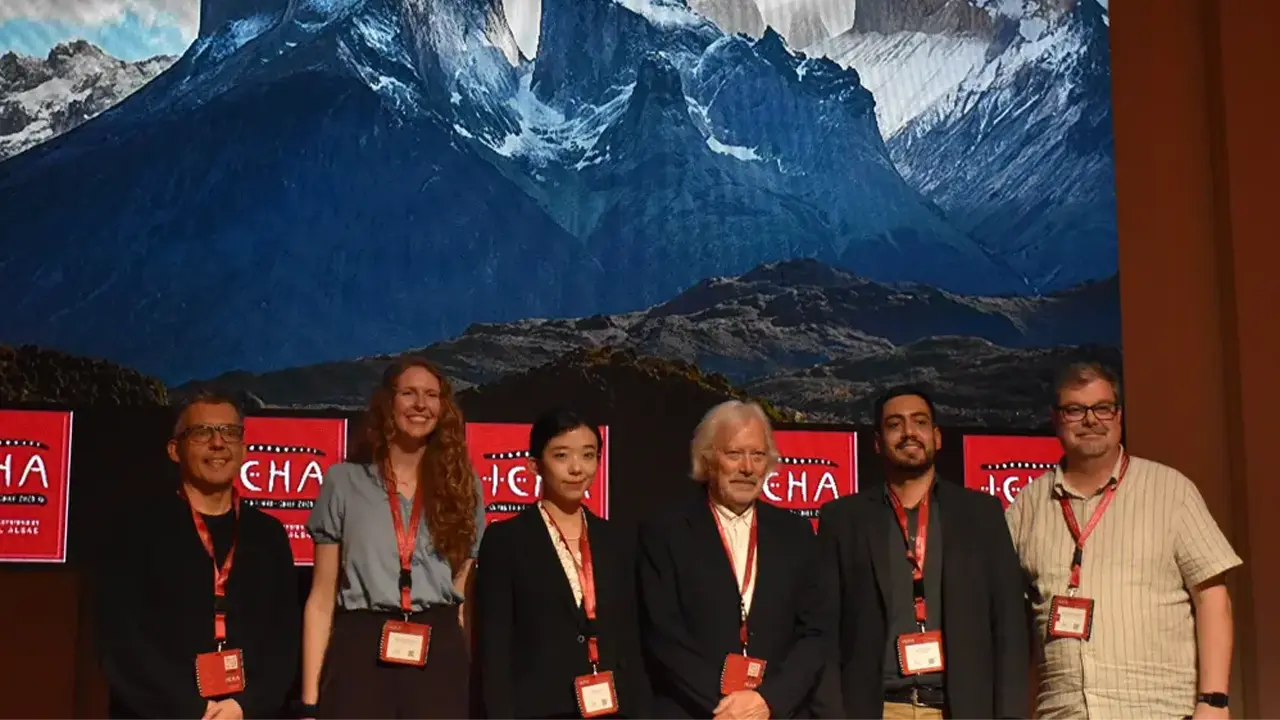


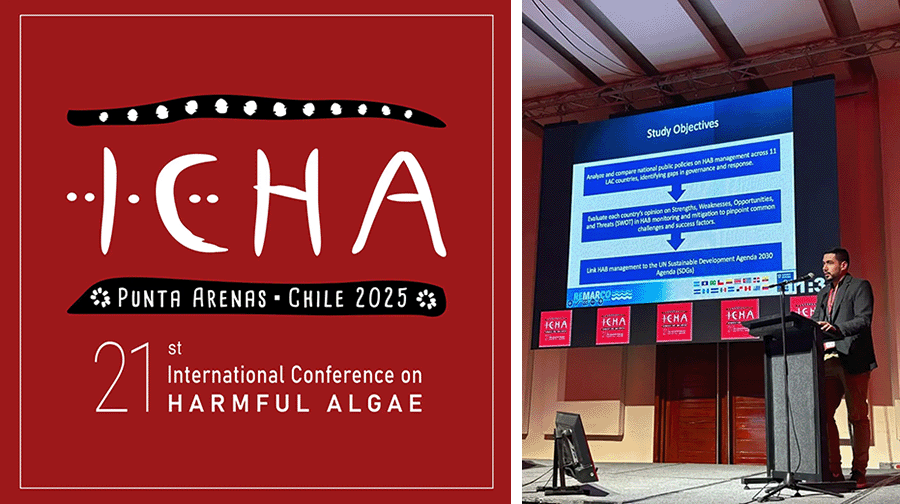
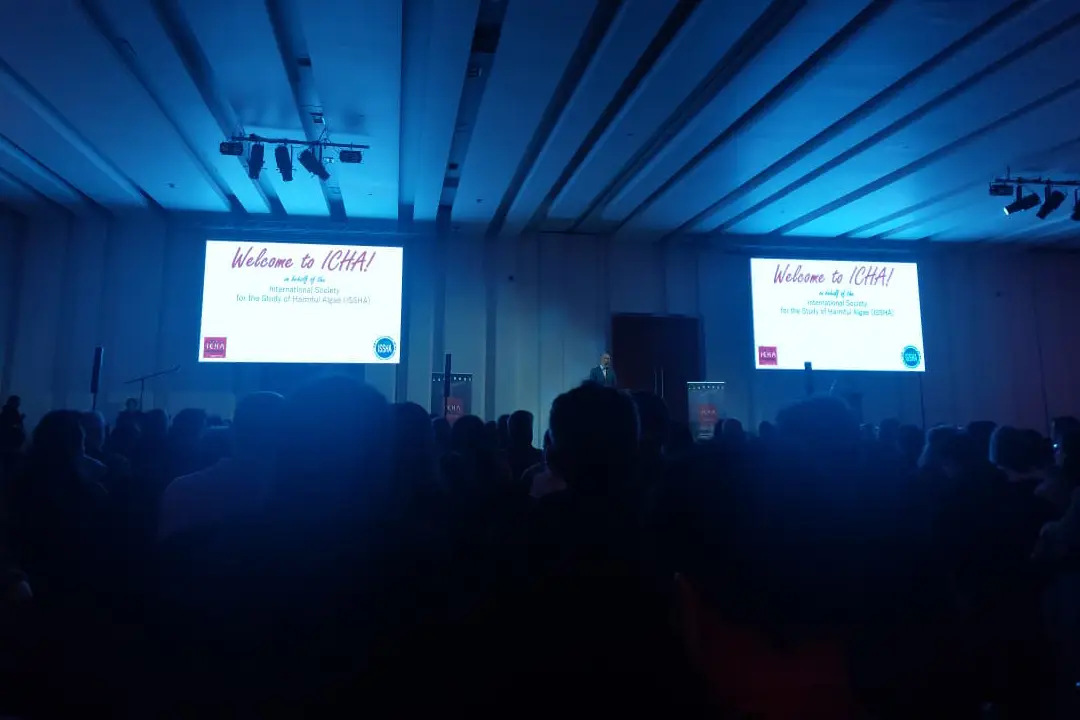
Our research technician, León Vergara, represented Ecuador at the 21st edition of the International Conference on Harmful Algae (ICHA 2025), the most prominent global scientific event dedicated to the study of Harmful Algal Blooms (HABs).
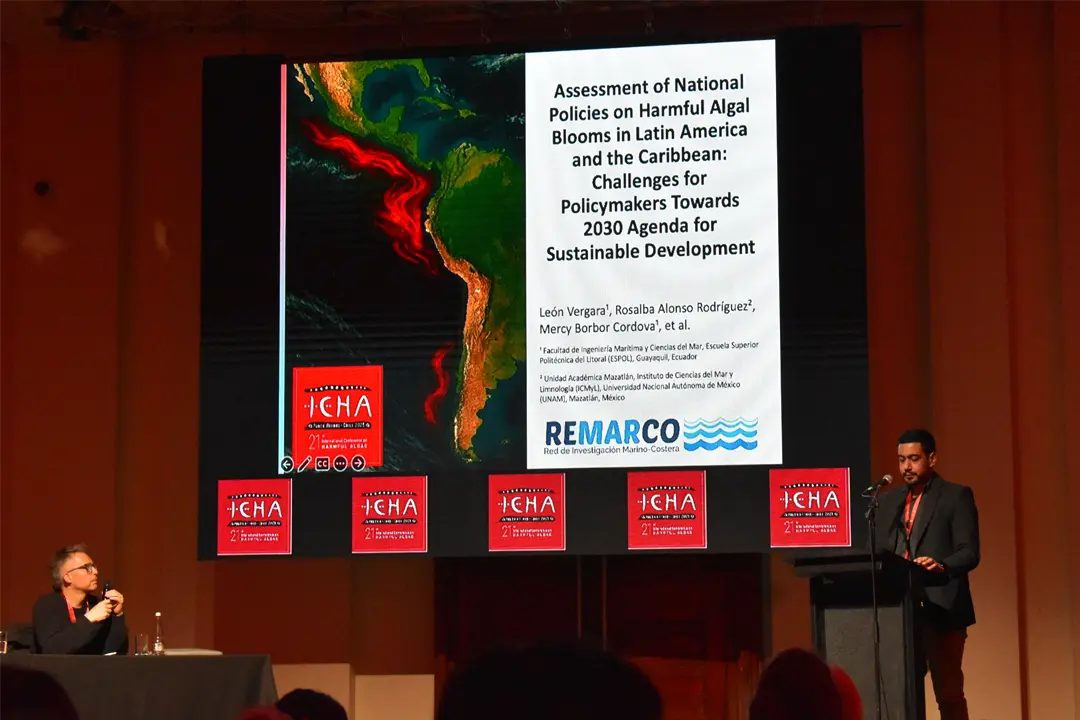
During his presentation titled “Assessment of National Policies on Harmful Algal Blooms in Latin America and the Caribbean: Challenges for Policymakers Towards the 2030 Sustainable Development Agenda,” he shared a comparative analysis of national public policies on algal blooms across Latin America and the Caribbean. His talk highlighted progress, regulatory gaps, and opportunities to strengthen regional management of these phenomena.
The study, developed within the framework of the IAEA/RLA7028 and REMARCO projects, aims to bridge the gap between science and decision-making. It promotes HAB management and prevention strategies aligned with the Sustainable Development Goals (SDGs), particularly SDG 14 (Life Below Water) and SDG 17 (Partnerships for the Goals).
Participating in ICHA 2025 represents an invaluable opportunity to showcase the efforts of Ecuador and the Latin American region in building evidence-based public policies. It underscores the importance of inter-institutional and regional cooperation in addressing the challenges posed by harmful algal blooms in the context of climate change.
About ICHA Organized every two years under the coordination of the International Society for the Study of Harmful Algae (ISSHA), ICHA brings together the world's leading experts dedicated to the comprehensive study of HABs. The event covers all components related to their understanding and management, including:
Taxonomy, cell biology, ecology, physiology, and genetics of toxic phytoplankton.
Toxin chemistry and detection.
Physical, chemical, and biological oceanography.
Remote sensing and predictive modeling.
Impacts on public health, aquaculture, and fisheries.
Environmental monitoring, mitigation technologies, governance, and risk communication.
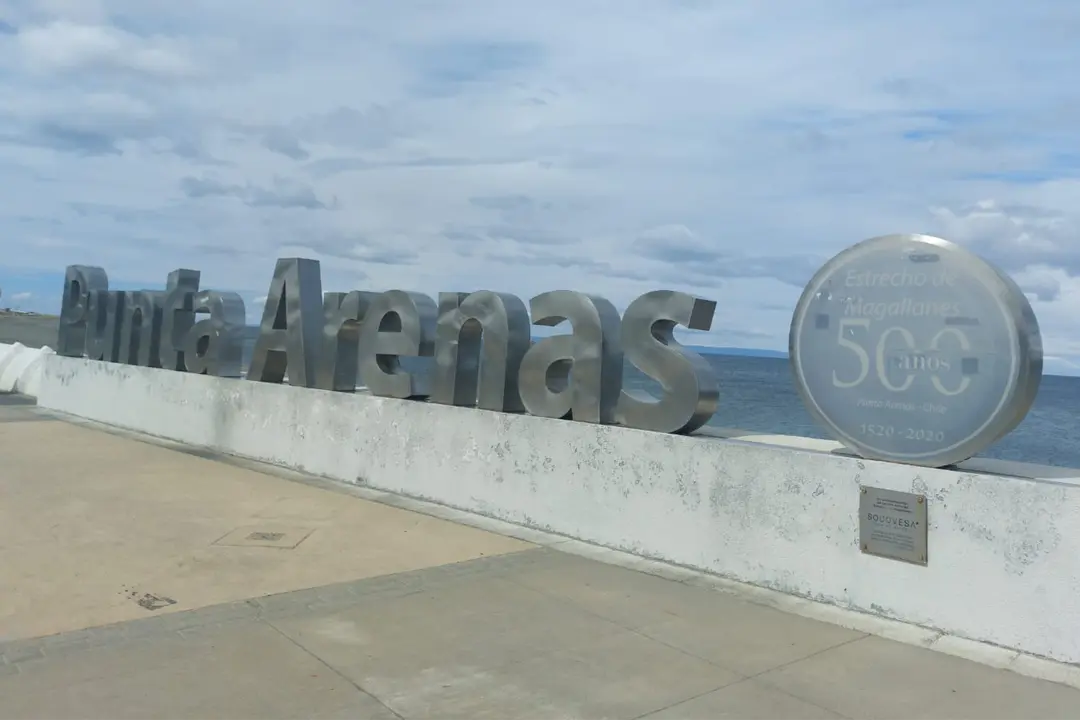
This edition, held in Punta Arenas, Chile, featured researchers and policymakers from over 70 countries who shared the latest advances in HAB surveillance, prediction, and mitigation.
Ecuador's participation reinforces the national commitment to marine science and international cooperation for the sustainable management of coastal and marine ecosystems.
Image
| Image
| Image
|