Ciudades y Comunidades Sostenibles

Julián Pérez, FLS-ESPOL Expert, Explains Urban Crocodile Behavior and Warns of Legal Penalties for Illegal Handling of Wildlife
Public concern was sparked in Guayaquil after a video went viral showing a man carrying an American crocodile (Crocodylus acutus) on his shoulders, with its jaws and limbs bound. The incident opened a debate on the presence of this species in urban tidal branches such as the Estero Salado, as well as the appropriate way the public should respond to sightings.

FLS-ESPOL professor and researcher Julián Pérez demystified the perceived inherent aggression of these reptiles during everyday encounters across the city:

Julián Pérez, FLS Professor, Analyzes Crocodile Sightings on Vía a la Costa and Rules Out Direct Link to El Niño

Neighborhood concerns near kilometer 8.5 of Vía a la Costa raised questions about whether the presence of these animals was driven by climate anomalies. In response to these inquiries, biologist and FLS-ESPOL research professor Julián Pérez clarified that these sightings are not necessarily tied to the onset of climatic events like El Niño, as the species has historically inhabited the tidal channels and mangrove branches of Guayaquil.

Biology Students from the ESPOL Faculty of Life Sciences Participate in the 9th Ecuadorian Ornithology Meeting (REO 2026)

Biology students from the Faculty of Life Sciences (FLS) at ESPOL participated in the 9th Ecuadorian Ornithology Meeting (REO 2026), held from July 29 to August 2, 2026, in Cotacachi, Imbabura province. This gathering brought together students, researchers, professionals, birdwatchers, and representatives from various organizations dedicated to the study and conservation of Ecuadorian and Neotropical avifauna.

Julián Pérez, FLS-ESPOL Professor and Researcher, Highlights Cerro Azul’s Ecological Value and Ecosystem Services for the City

The coexistence of residential neighborhoods in northwestern Guayaquil and the Cerro Azul natural reserve represents one of the city's most emblematic ecological and landscape models. While local families defend the integrity of this ecosystem against extractive and urban encroachment pressures, the scientific community corroborates the forest tract's direct impact on residents' well-being.

Community Nurseries: A Strategic Solution to Heatwaves Analyzed by FLS Expert

Given the unusual temperatures that have affected various cities across the country, reaching peaks of up to 35.8 °C and heat indices close to 40 °C, Edwin Jiménez, Eng., a research professor at the Faculty of Life Sciences (FLS), highlights the creation of community nurseries as a viable and sustainable alternative to balance climatic conditions.

Environmental Alert: FLS Warns of the Impact of Invasive Ornamental Plants on Local Ecosystems

A recent scientific study has revealed a silent threat to Guayaquil's biodiversity: the sale and use of exotic ornamental plants, specifically from the genus Thunbergia, which act as invasive species. Julián Pérez, a research professor at the Faculty of Life Sciences (FLS), emphasizes the urgent need to regulate irresponsible landscaping that is "planting an ecological time bomb" in the region.

Scientific Expedition: FLS Students Explore Biodiversity in Amazonian Caves

Image
noticia_cueva_de_los_tayos

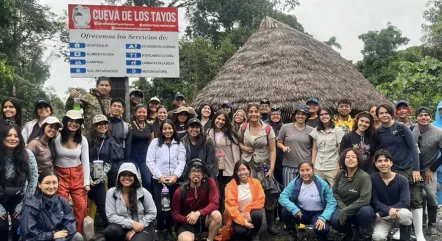
In a deep immersion into Ecuador's most enigmatic ecosystems, students from the Faculty of Life Sciences (FLS) at ESPOL conducted a comprehensive field trip to the Cueva de los Tayos and the Jumandy Caves. 

The expedition, which took place from January 8th to 11th, covered strategic locations in the provinces of Napo (Tena) and Pastaza (Puyo). The primary objective was to closely study the morphological and behavioral adaptations of native fauna inhabiting the extreme environments of Amazonian caverns.